Heavyweight Muay Thai in 5 Essential Facts
Key Takeaways
-
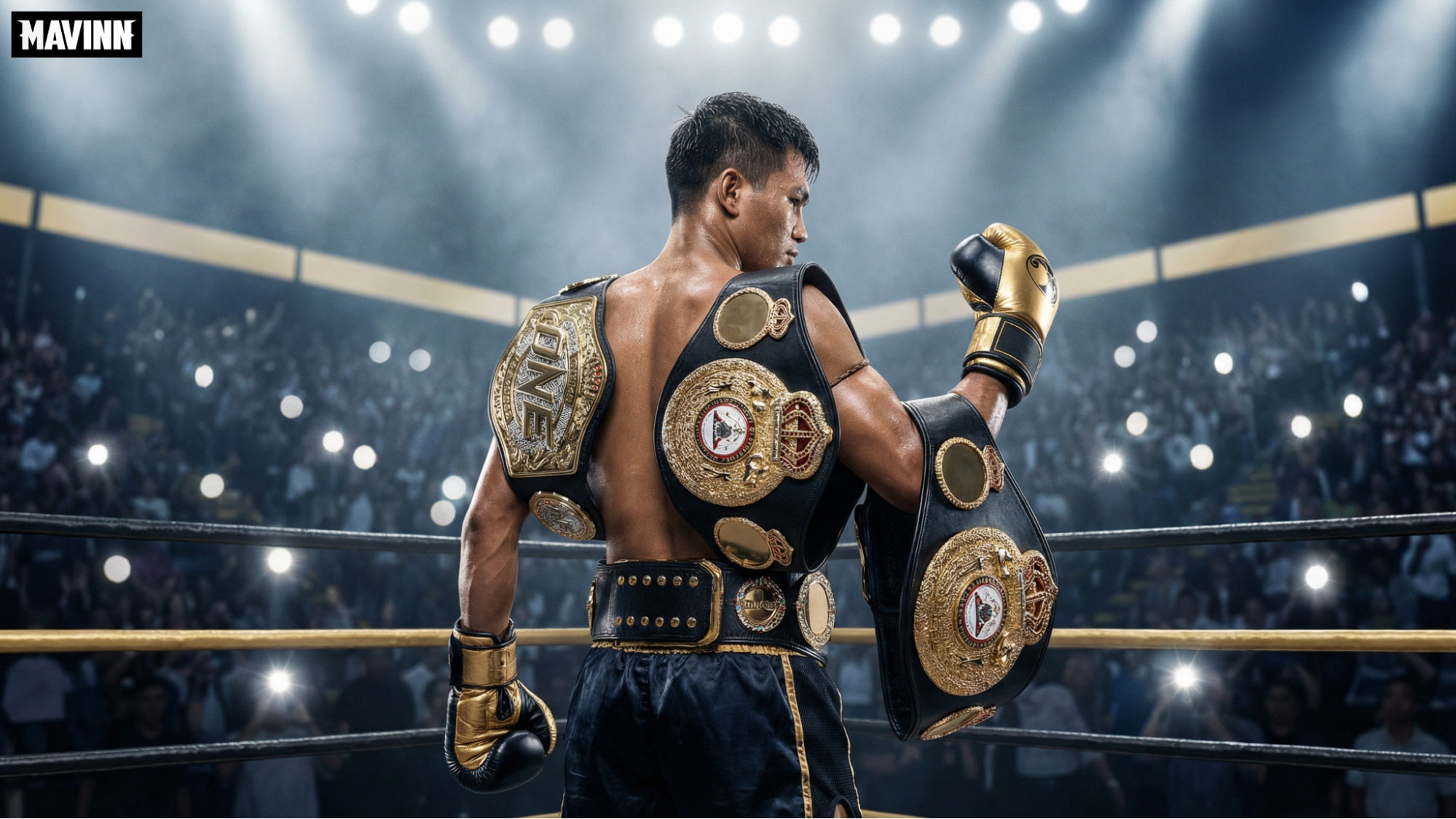
heavyweight muay thai centers on devastating knockout power and high-impact strikes rather than the high-volume, rapid-fire exchanges seen in lighter weight classes.
-
Professional fighters must prioritize explosive strength and neck conditioning to manage the massive kinetic energy generated during heavy clinch work.
-
Success in the ring depends on elite timing and precision, as the increased mass of athletes means a single clean elbow or low kick can end a bout instantly.
-
Training at this level requires durable, high-performance gear specifically designed to provide the shock absorption needed for extreme impact forces.
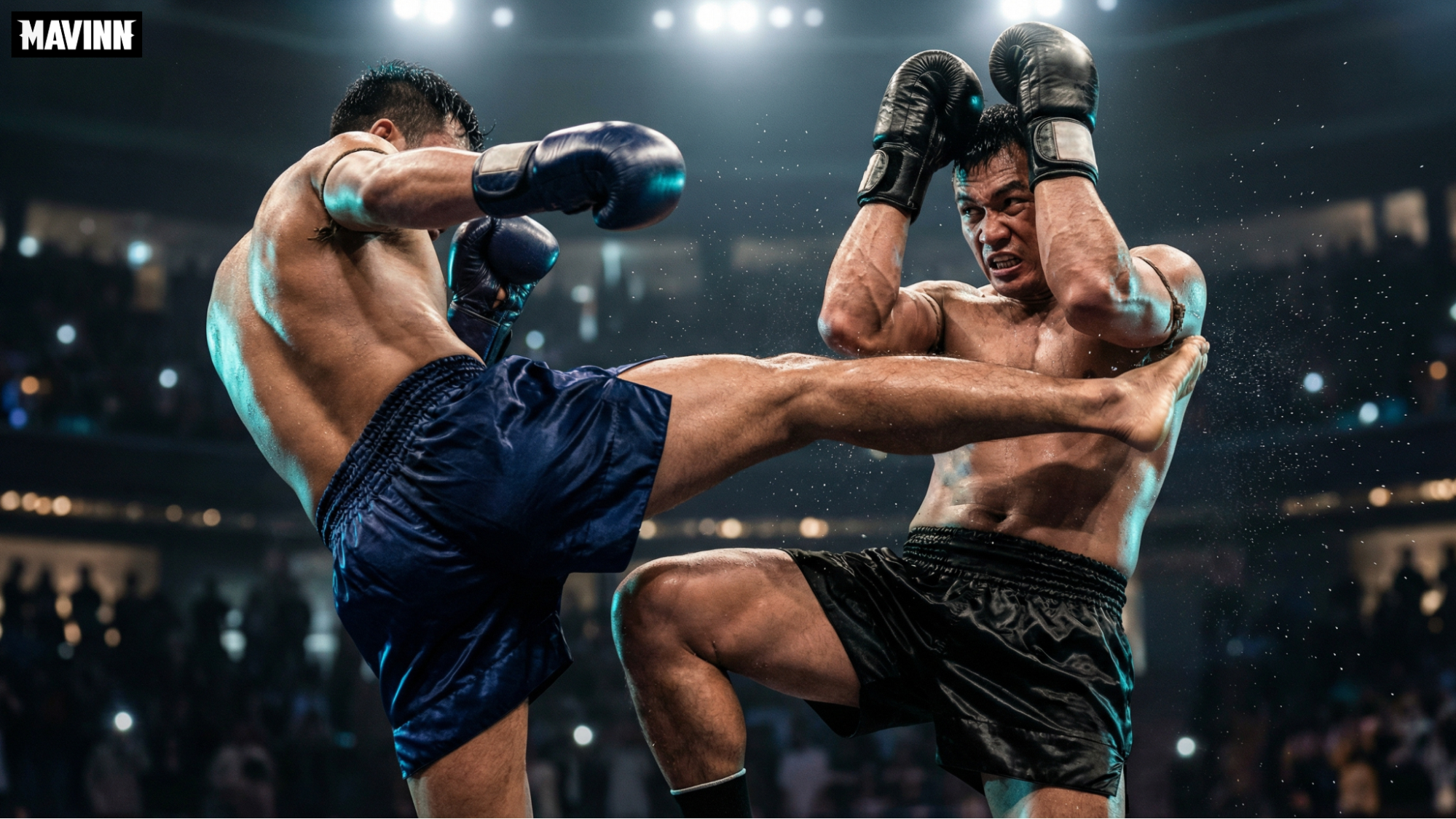
Heavyweight muay thai centers on devastating knockout power and high-impact strikes rather than high-volume exchanges. Success depends on elite timing and precision because the increased mass of these athletes turns every clean blow into a fight-ender. A single low kick in this division can generate extreme impact forces.
Training for this intensity requires high-performance gear built for extreme shock absorption, while fighters must prioritize neck conditioning to manage the massive kinetic energy generated during heavy clinch work.
Table of Contents
- Key Takeaways
- Fact 1 Understanding the weight limits in heavyweight Muay Thai
- Fact 2 How heavyweight Muay Thai differs from heavyweight boxing
- Fact 3 Essential techniques for heavyweight Muay Thai strikers
- Fact 4 The unique training challenges in heavyweight Muay Thai
- Fact 5 Choosing high impact gear for heavyweight Muay Thai with MAVINN
- Conclusion
Fact 1 Understanding the weight limits in heavyweight Muay Thai

Heavyweight Muay Thai represents the "unlimited" category where raw power often dictates the pace of the bout. Unlike lighter divisions governed by strict caps, fighters in this class fluctuate significantly in weight because there is no upper ceiling to restrict their total mass.
The absence of a maximum limit means you might face an opponent with a massive weight advantage, drastically changing the physics of every exchange. At this scale, even blocked strikes can cause structural damage due to the sheer momentum of the moving limb. Prioritizing high-density foam in your equipment safeguards your skeletal structure against extreme forces.
| Division Category | Weight (Lbs) | Weight (Kg) | Performance Focus |
|---|---|---|---|
| Cruiserweight | 200 lbs | 90.7 kg | Explosive Speed & Power |
| Heavyweight | 200+ lbs | 90.7+ kg | Maximum Impact Force |
| Super Heavyweight | 230+ lbs | 104.3+ kg | Absolute Mass Dominance |
Standard weight classes from WMO and WBC
Official heavyweight Muay Thai classifications for organizations like the WMO and WBC generally begin at a 200-pound (90.7 kg) threshold. These organizations establish these limits to categorize fighters whose mass generates kinetic energy far beyond the standard middleweight scales.
Weight limits in these upper divisions are less about weight cutting and more about managing the physics of impact. At this scale, every clean strike carries the momentum to end a fight instantly. High-quality foam padding must be tested to withstand extreme impact forces frequently generated during these heavy exchanges.
| Division Category | Weight (Lbs) | Weight (Kg) | Performance Focus |
|---|---|---|---|
| Cruiserweight | 200 lbs | 90.7 kg | Speed & Power |
| Heavyweight | 200+ lbs | 90.7+ kg | Maximum Impact Force |
| Super Heavyweight | 230+ lbs | 104.3+ kg | Absolute Mass Dominance |
Fact 2 How heavyweight Muay Thai differs from heavyweight boxing

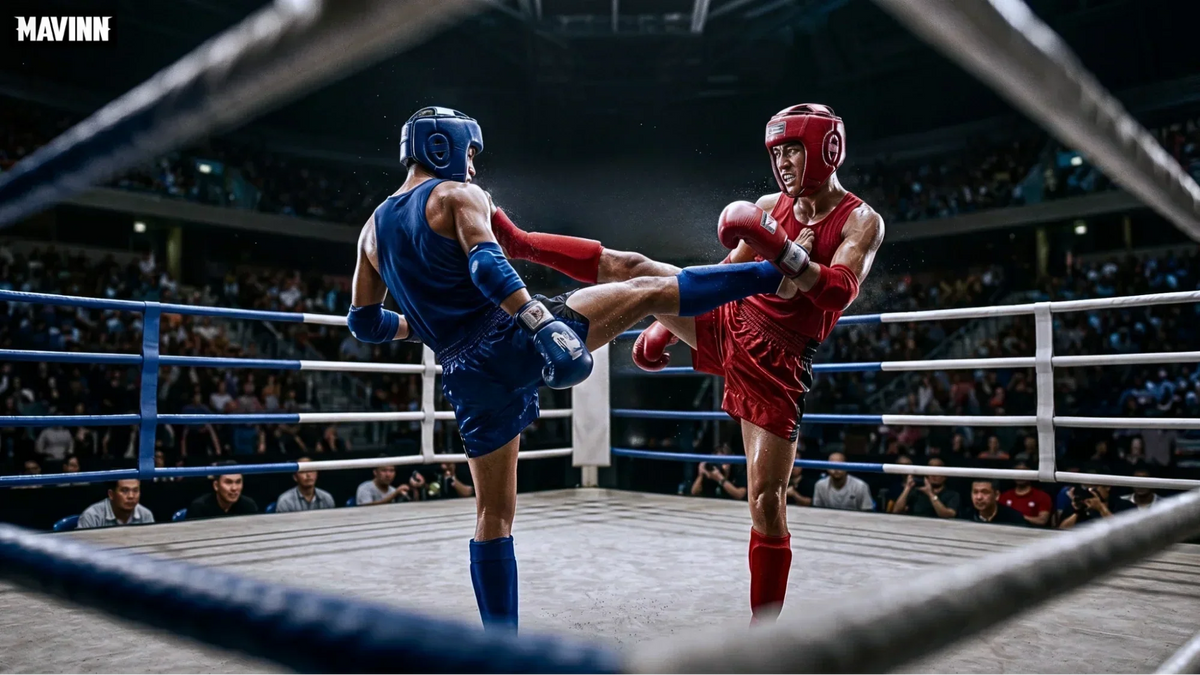
Heavyweight Muay Thai differs from heavyweight boxing primarily through the use of the "Art of Eight Limbs," introducing lethal strikes from the legs, knees, and elbows alongside traditional punching. This variety of weapons requires a square, upright stance to check incoming kicks, whereas boxers utilize a narrower, more mobile stance for agility.
The clinch also represents a significant tactical gap between the two disciplines. In boxing, the referee breaks a clinch almost immediately to restart the action. In heavyweight Muay Thai, the clinch is a primary offensive zone where athletes use their mass to off-balance opponents and deliver devastating short-range strikes. Specialized gear must be engineered for these multi-angled forces.
| Feature | Heavyweight Muay Thai | Heavyweight Boxing |
|---|---|---|
| Legal Weapons | 8 Limbs (Fists, Elbows, Knees, Shins) | 2 Limbs (Fists only) |
| Clinch Rules | Active offensive zone for knees and elbows | Strategic reset; broken by the referee |
| Primary Defense | Leg checking and long-guard parrying | Head movement, slipping, and high-guard |
| Impact Focus | Multi-point (Legs, Body, Head) | Concentrated (Body and Head) |
Strike variety and distance management
Heavyweights must master the "long guard" and lead-leg teep to neutralize the extreme impact forces generated by an opponent's forward momentum. Unlike lighter divisions where speed dictates the rhythm, heavyweight Muay Thai relies on tactical shot selection to prevent getting trapped against the ropes. You use low kicks and stiff jabs to measure the gap, ensuring you stay outside the "kill zone" of a 200-pound haymaker.
Managing distance isn't just about backing away; it involves using elbows as "stop-hits" the moment an attacker breaches your perimeter. MAVINN designs its gear with high-density padding to handle these rapid transitions from long-range kicking to zero-range clinching. Effective distance management allows a fighter to land a powerful roundhouse kick while remaining safely out of reach of a counter-strike.
Energy management for larger athletes
Energy management in heavyweight Muay Thai hinges on minimizing unnecessary movement to preserve explosive power for high-impact exchanges. Carrying a heavier frame requires a tactical "slow-burn" approach where you prioritize ring generalship over constant footwork. High-performance equipment should be lightweight yet ultra-protective, ensuring your gear doesn't become a weight penalty during the later rounds.
-
Use "active resting" in the clinch by leaning your mass on the opponent to force them to support your weight.
-
Focus on short combinations rather than high-volume flurries to maintain a steady heart rate.
-
Use the teep and long guard to reset the pace, giving you a brief window to breathe between engagements.
Efficient breathing is your most valuable asset when dealing with the high-oxygen demand of larger muscle masses. Over-committing to a missed head kick can deplete your gas tank faster than taking a direct blow. Focus on landing heavy single shots that force your opponent to respect your power while you recover your positioning.
Fact 3 Essential techniques for heavyweight Muay Thai strikers

Heavyweight strikers must prioritize stopping power over high volume, using precise counters like the check hook and the spear knee to halt aggressive momentum. Unlike lighter classes, a single massive connection often ends the fight, making tactical patience more valuable than raw speed.
Effective heavyweight Muay Thai relies on blinding opponents to set up heavy finishing blows, requiring precise timing to stay clear of the counter-strike range during the reset. Because of the extreme forces involved, using equipment with reinforced padding is critical to ensure your hands survive the massive kinetic energy generated by these collisions.
Using leg kicks to slow down opponents
Targeting the lead leg is the most efficient way to immobilize massive athletes in heavyweight Muay Thai and neutralize their forward pressure. You must focus your strikes on the common peroneal nerve or the lower quadriceps to disrupt the neural connection required for explosive movement. This tactic forces a heavier fighter to shift their center of gravity, effectively stripping them of the stable base needed to launch a knockout blow.
Timing your kick to land exactly as your opponent steps forward ensures they cannot check the strike or retract their limb in time. Landing three to four clean shots on the inner thigh often causes immediate muscle cramping, which significantly reduces their lateral mobility by the middle rounds. Proper high-density padding is required to protect your tibia when these high-velocity impacts collide with an opponent's frame.
The power of the clinch in heavy divisions
The clinch in heavyweight Muay Thai acts as a primary fatigue engine that weaponizes an athlete’s mass to break an opponent's structural integrity. By securing a dominant plumb position, you force a larger opponent to carry your entire body weight, which rapidly accelerates muscle failure in the shoulders and neck. This constant downward pressure disrupts their breathing rhythm and prevents them from resetting for high-power strikes.
Controlling the head allows you to manipulate the center of gravity, making it impossible for a heavy opponent to plant their feet for a knockout counter. MAVINN designs its training gear with non-slip textures to ensure you maintain a tight grip even when sweat affects friction during high-intensity grappling. Executing a successful off-balance turn during the clinch often results in a stumble that opens a direct path for a knee strike to the liver.
Fact 4 The unique training challenges in heavyweight Muay Thai

Training for heavyweight Muay Thai centers on managing extreme mechanical stress while maintaining explosive power. Carrying a heavy frame puts immense pressure on the body during high-velocity pivots or defensive sprawls.
Large muscle groups also demand massive oxygen levels, making cardiovascular recovery a primary hurdle for fighters in this division. You must balance raw strength with the specific aerobic capacity needed to survive five rounds of grinding clinch work. Professional training equipment is engineered with reinforced padding to handle the significant kinetic energy generated when heavy athletes collide.
| Challenge | Training Strategy | Key Metric |
|---|---|---|
| Joint Stress | Low-impact plyometrics | Protects knees of heavyweight fighters |
| Oxygen Debt | Metabolic interval training | Sustains power for 5-round bouts |
| Gear Failure | High-density foam | Reduces impact transfer |
| Mobility | Center of gravity drills | Prevents stumbling during pivots |
Managing joint health and recovery
Heavyweight Muay Thai fighters must prioritize joint integrity because larger bodies generate massive torque that wears down cartilage faster than lighter divisions. Focus on structural support and strategic inflammation management to prevent chronic injury. Using equipment with multi-layered shock absorption reduces the kinetic energy transferred to your knees during repetitive heavy-bag work.
-
Incorporate low-impact swimming twice weekly to maintain cardio without adding extra pounding to your ankles.
-
Perform isometric holds for the quads and calves to build stability around the joint capsules.
-
Schedule a deload week every four weeks where striking volume is reduced significantly to allow connective tissue to repair.
Large athletes should track their morning resting heart rate as a signal for systemic fatigue. If your heart rate spikes noticeably above your baseline, skip the heavy sparring and focus on technical clinching. This data-driven approach ensures you stay on the mats for decades rather than burning out in a single season.
Finding the right sparring partners
Prioritize partners who balance technical control with enough size to simulate the impact of heavyweight muay thai. You need a mix of big-on-big sessions to feel genuine pressure and technical rounds with lighter, faster strikers to improve your defensive footwork. Sparring only with other heavyweight fighters increases the cumulative trauma on your joints, so aim for a healthy balance between technical flow and high-intensity rounds.
Vet your partners for emotional control to ensure they won't escalate intensity when they get caught with a heavy shot. Even at reduced power, a heavyweight's strike carries enough kinetic energy to cause a concussion or tear a ligament. Use specialized sparring gloves and extra-wide shin guards to provide a safety buffer for both you and your training partner.
Fact 5 Choosing high impact gear for heavyweight Muay Thai with MAVINN

Heavyweights must prioritize heavier sparring gloves and high-density, multi-layered shin guards to manage the massive kinetic energy generated by 100kg+ bodies. MAVINN engineers gear with reinforced shock absorption to protect joint integrity and prevent the chronic cartilage wear common in heavyweight muay thai. Standard equipment often bottoms out under this level of force, leading to avoidable wrist and shin injuries.
-
Heavy-Profile Gloves: Offers a thicker foam profile to safeguard both your knuckles and your training partner from high-mass impact.
-
Wide-Profile Shin Guards: Distributes striking force across a larger surface area to shield the tibia and ankle capsules.
-
High-Compression Foam: Resists flattening over time, maintaining a consistent safety buffer during heavy bag sessions.
Equipment longevity is a critical safety factor, so Replace padding regularly for athletes training three or more times weekly. MAVINN uses industrial-grade materials to ensure its gear survives the high-torque demands of the heaviest hitters. This technical focus allows you to maintain high-intensity output without compromising your long-term mobility.
Conclusion
Success in heavyweight muay thai demands a balance between absolute knockout power and technical durability. Because strikes in this division generate extreme impact forces, every exchange requires elite timing and specialized protection. Utilizing equipment with reinforced high-density foam is essential to safeguard your joints against these extreme kinetic forces.
Managing a heavier frame also necessitates a focus on energy efficiency and structural longevity. You must prioritize low-impact recovery and precise clinch work to weaponize your mass without draining your gas tank. Switching to heavier sparring gloves provides the essential safety buffer needed for consistent, high-impact training sessions.