Sparring Etiquette in Muay Thai for Beginners
Key Takeaways
-
Muay Thai gym etiquette runs from how you greet instructors through to how you conduct yourself during rounds, with controlled intensity, clear communication and proper gear all part of the same code. Having a correct kit, particularly well-fitted shin guards, protects both you and your training partner and signals how seriously you take the sport. Shop MAVINN and buy Muay Thai shin guards, built to withstand daily sparring.

Sparring carries its own code on top of that. Control, communication and protective gear are as much a part of Muay Thai etiquette as bowing to your instructor. New students often walk into a Muay Thai gym focused on learning technique and miss the unwritten rules that keep the room running, and running safely. Your choice of attire and equipment for class, from shin guards to a form-fitting training top, demonstrates your commitment to the gym and your fellow participants even before the first kick is thrown.
Table of Contents
- Key Takeaways
- The Unwritten Rules of Muay Thai Gym Etiquette
- Sparring Etiquette: Protecting Your Training Partner
- What to Wear for Muay Thai Training
- Lightweight vs Heavy-Duty Shin Guards for Training
- Why Choose MAVINN Shin Guards
- Get Quality Muay Thai Shin Guards at MAVINN
- References
- Frequently Asked Questions About Muay Thai Sparring Etiquette
The Unwritten Rules of Muay Thai Gym Etiquette
Every Muay Thai gym has a set of expectations you pick up by watching rather than being told. To instructors, these are the standards that separate students who progress quickly from the rest.
-
Greet the head trainer and senior students respectfully when you arrive, regardless of your experience level.
-
Arrive on time and warm up independently rather than waiting to be walked through it.
-
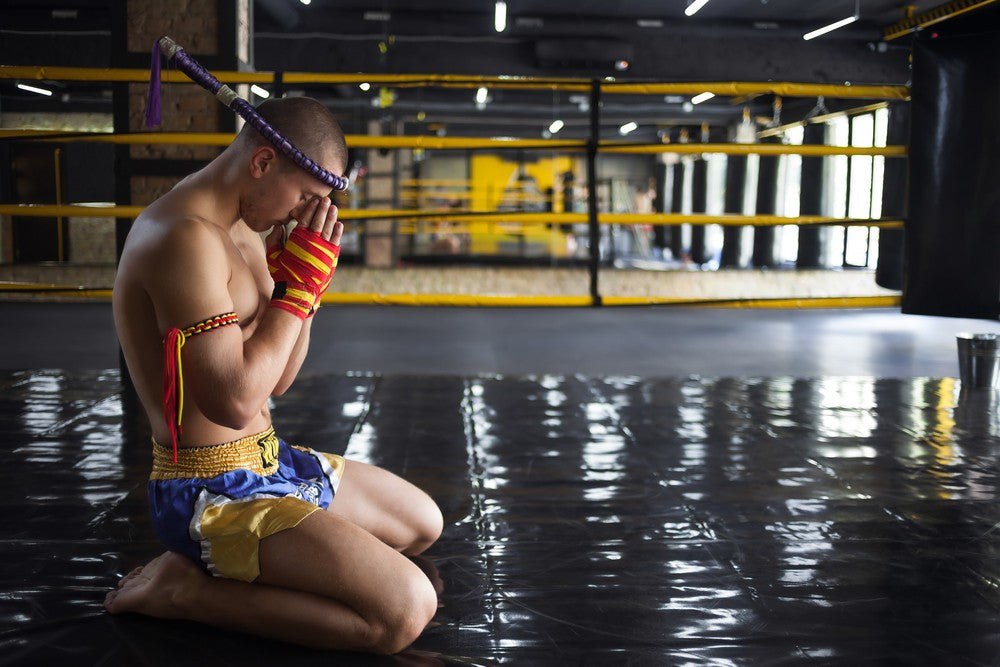
Observe wai kru when it is performed, the traditional pre-training ritual that reflects respect for the sport's Thai heritage.
-
Wipe pads down after use and pick up after yourself in the ring area.
-
Ask permission before jumping into a pad round or drill with a training partner already working.
Instructors notice students who follow these quickly, and it changes how much attention and correction you get in return.
Sparring Etiquette: Protecting Your Training Partner
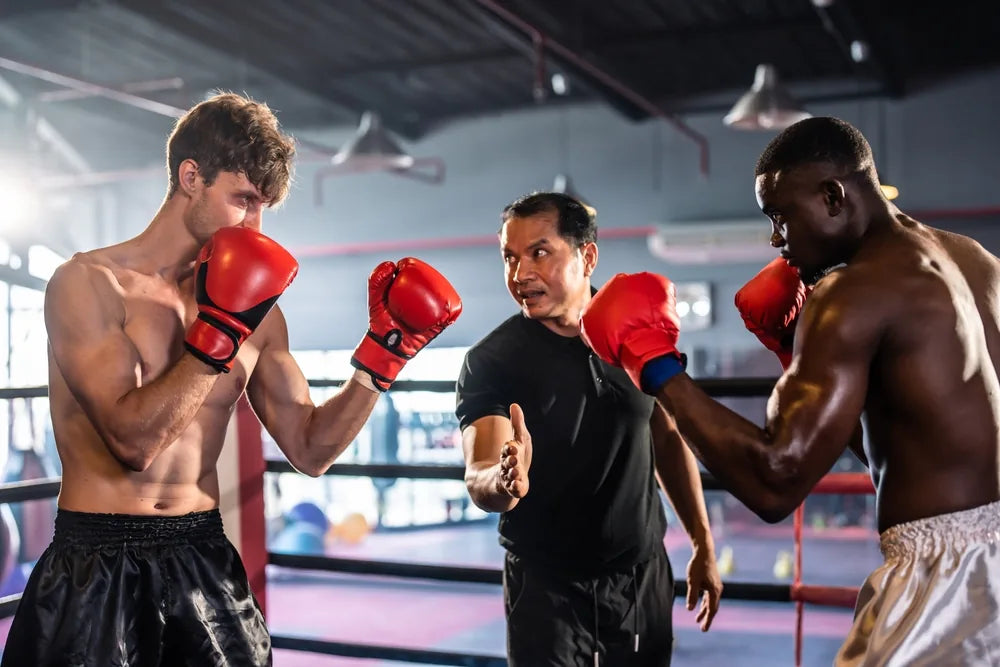
Sparring is where Muay Thai sparring etiquette matters most, because control is what keeps everyone healthy and training long-term. Sparring is a controlled technique exchange, not full-power fighting, especially between partners at different experience levels.
When an experienced student pushes too hard against a novice, it proves nothing. Similarly, if a beginner overexerts themselves against a senior, it can lead to injuries that prevent both from training. Effective communication, both before and during rounds, ensures safety.
Here are core habits that make you a partner people want to spar with:
-
Agree on intensity before the round starts, and stick to it.
-
Match your partner's level rather than the level you wish you were at.
-
Call out if something is not working or lands harder than intended.
-
Pause and reset if either of you needs a moment.
-
Touch gloves and thank your partner at the end of every round.

What to Wear for Muay Thai Training
The gear you select influences your capabilities and how others perceive you. Fitted tank tops or rash guards are generally preferable to loose t-shirts. This is because loose t-shirts can hinder close-quarters grappling, tend to ride up during practice sessions, and provide opponents with handholds that can destabilize your stance.
Shorts should allow full range of motion for kicks and knees without excess fabric getting caught, which is why traditional Muay Thai shorts are cut wide at the hem. For any class involving sparring or partner drilling, the expected kit is:
-
Fitted top: tank top, rash guard or a well-cut technical tee.
-
Muay Thai shorts: wide hem, no restrictive seams.
-
Hand wraps: standard practice regardless of experience level.
-
Gloves: weight matched to the round's intensity.
-
Shin guards: required for any partner kicking or sparring.
-
Mouthguard: non-negotiable for any contact sparring.
Lightweight vs Heavy-Duty Shin Guards for Training
Shin guards are the piece of protective gear beginners most often get wrong, either buying too light for the sparring they end up doing or too bulky for technical work.
The main trade-offs to weigh before buying:
-
Lightweight shin guards: best for technical sparring and pad drills where mobility and speed matter most. Less bulk lets you move through kicks and check kicks quickly.
-
Heavy-duty shin guards: higher-density padding suits harder sparring or clinch-heavy sessions with more contact, protecting both shins during full-power exchanges.
-
Material: premium leather with high-density foam offers the most durable shock absorption over daily use, while lighter synthetic builds trade some longevity for mobility.
-
Fit: matters as much as padding thickness. A shin guard that shifts out of place mid-round exposes the leg exactly when you need protection most.
Try before you commit where possible, or check the sizing chart carefully if buying online to ensure you get the right shin guards.
Why Choose MAVINN Shin Guards
At MAVINN, our shin guards are built from premium leather with high-density foam padding, designed to absorb the shock of heavy sparring rather than just the lighter contact of pad rounds. Construction is aimed at daily gym use, not occasional training, so the padding holds shape and the leather resists the abrasion that breaks cheaper builds down.
They are designed to protect both your shins and your training partner, which is the core principle behind safe sparring etiquette in the first place. The range sits alongside our wider coaching and protective gear collection, keeping your kit consistent across gloves, pads and shin protection.
Get Quality Muay Thai Shin Guards at MAVINN
Good etiquette is intrinsic to any dedicated Muay Thai practitioner, and maintaining it is easier when your gear is doing its job in the background. Shin guards that fit properly and absorb impact reliably remove one of the more common excuses for uncontrolled sparring, so you spend the round focused on technique and partner safety rather than adjusting slipping padding.
Shop MAVINN and buy Muay Thai shin guards today. Made with top-quality leather and dense foam, these shin guards are perfect for daily sparring, ensuring safety for you and your training partner throughout each round.
References
- Muay Thai. Retrieved August 13, 2026, from https://www.britannica.com/sports/muay-Thai
- International Federation of Muaythai Associations (IFMA). Retrieved August 13, 2026, from https://muaythai.sport/
- Tourism Authority of Thailand: Muay Thai. Retrieved August 13, 2026, from https://www.tourismthailand.org/
Frequently Asked Questions About Muay Thai Sparring Etiquette
What Is Muay Thai Sparring Etiquette?
It is the set of unwritten rules that govern how partners spar safely, covering controlled intensity matched to your partner's level, clear communication before and during rounds, proper protective gear, and acknowledging your partner at the end of every round.
What Should A Beginner Wear For Muay Thai Sparring? T-Shirts or Tank Tops?
Fitted tank tops or rash guards, traditional Muay Thai shorts, hand wraps, gloves matched to the round's intensity, a mouthguard, and well-fitted shin guards. Loose t-shirts and casual sports kits are generally not appropriate for sparring rounds.
Do I Need Shin Guards For Every Muay Thai Class?
For technique-only classes without partner contact, shin guards are optional. For any class involving partner drilling, pad rounds with kicks, or sparring, shin guards are expected. Most gyms will not allow you to spar without them.
How Hard Should You Spar In Muay Thai?
Match your partner's level and the agreed intensity, usually well below full power. Technical sparring at thirty to fifty per cent contact is the norm for most training rounds, with harder sparring reserved for fight camps and only with willing, experienced partners.