What is Thai Fight? Guide to shows and prices
Key Takeaways
- thai fight - established in 2009, this promotion held its inaugural Kard Chuek event in August 2010 and redefined how traditional Muay Thai is presented to a global audience.
- Replacing boxing gloves with hemp ropes increases strike impact and forces fighters to rely on active parries and head movement.
- Live events are often free at provincial landmarks, but arriving three hours early is necessary to secure seating for televised broadcasts.
- Training for these bouts burns 1,000 calories per hour and requires specialized 4.5-meter wraps and moisture-wicking apparel.
Thai Fight is a premier Muay Thai promotion that brought Kard Chuek (rope-binding) combat into the modern mainstream. It blends elite striking skills with high-production entertainment to showcase the "Art of Eight Limbs" to a global audience. The promotion was established in 2009 and held its inaugural event in August 2010, setting a new standard for how traditional Thai boxing is presented. For enthusiasts planning a comprehensive Muay Thai stay and train in Thailand experience, attending one of these events is a crucial part of understanding the modern combat culture.
The platform bridges the gap between ancient martial traditions and contemporary street lifestyle, influencing both combat gear and athletic fashion. This high-energy format directly shapes training requirements and the aesthetic of the modern fighter — from the gear fighters choose to the conditioning methods they prioritize.
Table of Contents
What exactly is Thai Fight ?

Thai Fight is a premier Muay Thai promotion that blends traditional martial arts with high-octane stadium entertainment to showcase Thailand's national sport to a global audience. Established in 2009 with its first event in August 2010, the promotion revolutionized the industry by prioritizing tournament formats and high production values that mirror the energy of a massive rock concert. You will see elite fighters competing under unique rules, often swapping standard boxing gloves for traditional rope bindings known as Kard Chuek.
The promotion gained massive international popularity in 2011 following the signing of Buakaw Banchamek, one of Muay Thai's most recognized names worldwide. Events frequently take place in iconic locations across Thailand and internationally, from historic city landmarks to open-air provincial plazas. Thai Fight is widely recognized as the catalyst that moved Muay Thai from gritty local stadiums into a lifestyle phenomenon that now heavily influences modern combat sports culture.
Understanding Kard Chuek and basic rules

Rope-binding combat defines the high-stakes atmosphere of a thai fight, where athletes trade padded gloves for raw hemp wraps. This traditional method, known as Kard Chuek, uses coarse cords to harden the striking surface and significantly increase the impact of every punch. You will notice that while the ropes look brutal, modern safety standards require fighters to wear hidden protective wraps underneath to prevent bone fractures.
Matches typically consist of 3 rounds lasting three minutes each, forcing a much higher pace than the standard five-round stadium circuit. This accelerated tempo demands elite conditioning, as the scoring system heavily favors forward pressure and continuous striking. If a bout remains tied after the regulation time, a sudden-death extra round is triggered to ensure a winner is crowned.
Signature moves from Thai Fight competitors
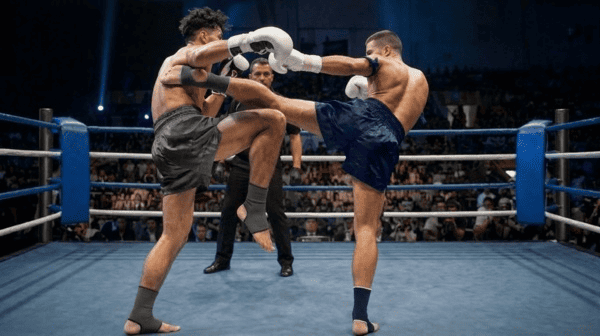
The cartwheel kick is among the most visually iconic techniques seen in Kard Chuek bouts, combining extreme athleticism with deceptive power. This technique involves planting a single hand on the canvas to launch a high-arc roundhouse kick that bypasses a standard high guard. It is a high-risk, high-reward maneuver that requires the fighter to track the opponent’s chin while upside down.
- Cartwheel Kick: A hand-planted vertical strike used to catch opponents off-guard during mid-range exchanges.
- Diving Elbow: A jumping downward strike favored by aggressive clinchers to exploit openings in rope-bound defenses.
- Scissor Knee: A mid-air leg switch that generates massive upward momentum to target the solar plexus or chin.
These signature moves are specifically designed for the Kard Chuek format, where traditional gloves are replaced by hemp ropes. You need specific wrist stability and explosive hip power to land these strikes without sustaining self-injury.
History and the rise of modern Muay Thai

Modern Muay Thai transitioned from a battlefield necessity called Muay Boran to a regulated global sport during the 1920s. This era saw the introduction of padded gloves, timed rounds, and standardized rings to replace the raw rope wraps used in ancient villages. This foundation shaped the professional thai fight culture visible in modern stadiums like Lumpinee and Rajadamnern.
The 2010s marked a second evolution with the rise of massive televised promotions that blended traditional techniques with high-production entertainment. These events repopularized the Kard Chuek style, where fighters use traditional hand wraps instead of gloves to increase striking impact. This resurgence has bridged the gap between ancient heritage and modern street culture, directly influencing the aggressive aesthetics of current activewear designs.
Price guide for watching a live Muay Thai show

Tickets for a live Muay Thai show generally range from free for major televised promotions like Thai Fight to over 4,000 THB for premium ringside seating at historic venues. While local stadium entries start as low as 300 THB, the cost varies significantly based on the prestige of the event and your proximity to the canvas. Major televised shows often utilize large outdoor arenas or shopping mall plazas to accommodate massive crowds without an entry fee.
| Seat Category | Price Range (THB) | Best For |
|---|---|---|
| General Admission | 300 - 1,500 | Authentic local betting culture |
| Club / Grandstand | 1,800 - 2,500 | Elevated views and air conditioning |
| Ringside / VIP | 3,000 - 4,500+ | Close-up action and photography |
When attending a Thai Fight event, you should arrive at least three hours early because these high-production shows prioritize first-come, first-served seating for their free sections. For permanent stadiums like Rajadamnern, booking through official websites is essential to avoid the inflated prices often found at street-side kiosks. Expect to pay a premium of roughly 500 THB during major title fights or international tournaments featuring world-renowned nak muay.
How much does a Thai Fight ticket cost ?
Most Thai Fight events held in Thailand are free to the public because they are organized as promotional festivals sponsored by major national brands. Unlike traditional stadiums where you pay at the door, these shows often take place in open plazas or provincial landmarks to maximize attendance. You simply need to arrive at the venue early—often several hours before the first bout—to secure a seat in the general admission section.
- General Admission: Free (first-come, first-served)
- VIP/Ringside: 1,000 to 3,000 THB (available at select high-profile events)
- International Shows: $50 to $150 USD (depending on the host country and venue)
If you want a guaranteed seat near the action, limited VIP tickets are sometimes sold through official sponsors or ticketing platforms. These premium spots allow you to witness the intensity of Kard Chuek (rope-bound) fighting without navigating the massive standing crowds. Monitor the official Thai Fight social media channels around ten days before the event for specific registration links or ticket booth locations.
Where to find a Muay Thai show nearby
You can find premier Muay Thai shows at iconic venues like Rajadamnern Stadium or through traveling promotions like Thai Fight. While stadiums provide fixed weekly schedules, Thai Fight hosts massive outdoor events in various provinces and international cities throughout the year. Check official social media pages or digital ticketing platforms to confirm specific dates for these high-production spectacles.
If you want a modern experience, Lumpinee Stadium hosts the ONE Friday Fights series featuring elite global strikers every week. Most traditional stadiums operate on a rotating schedule, with professional bouts typically beginning at 6:00 PM on weeknights. For a raw, local atmosphere, visit the Channel 7 Stadium on Sunday afternoons where entry is often free for the standing section.
The Thai Fight promotion often sets up in unique locations such as historical parks or beachfront plazas to showcase traditional rope-bound techniques. These events are frequently broadcast live on Channel 8, attracting thousands of spectators to witness their signature tournament formats. Plan to arrive at the venue at least 60 minutes before the first bout to secure a clear view of the ring.
Why choose Muay Thai over other martial arts ?

Muay Thai offers a more complete striking arsenal than any other discipline by utilizing eight points of contact instead of just two or four. While traditional boxing focuses solely on your hands, a high-level thai fight incorporates elbows, knees, and shins to bridge the gap between long-range kicking and close-quarters clinching. This versatility makes it the most effective stand-up art for both real-world self-defense and comprehensive athletic conditioning.
| Feature | Muay Thai | Boxing | Taekwondo |
|---|---|---|---|
| Striking Weapons | 8 (Fists, Elbows, Knees, Shins) | 2 (Fists) | 2 (Heavy Kick Focus) |
| Clinch Control | Full Grappling & Strikes | Prohibited/Ref-Break | Non-existent |
| Physical Conditioning | Total Body & Shin Hardening | Upper Body & Footwork | Flexibility & Snap Speed |
Beyond the technical edge, the training intensity builds a level of cardiovascular endurance that translates directly to a leaner, more explosive physique. You are not just learning to strike; you are hardening your shins and conditioning your core to withstand the impact of a heavy roundhouse kick. Muay Thai training prioritizes this raw, functional power — intensive sessions can burn up to 1,000 calories per hour while building a battle-tested physique.
Comparing health benefits and self defense skills
Choosing a Thai fight training regimen balances elite-level cardiovascular conditioning with the practical application of the "Art of Eight Limbs." You gain the ability to burn up to 1,000 calories per hour while mastering techniques that utilize shins, elbows, and knees for real-world protection.
| Feature | Health Benefits | Self-Defense Skills |
|---|---|---|
| Physical Impact | High-intensity HIIT training that builds explosive power. | Teaches distance management and neutralizing threats quickly. |
| Mental Edge | Stress relief through high-volume striking and endorphin release. | Enhances situational awareness and composure under pressure. |
| Core Results | Full-body toning with a focus on core and hip mobility. | Practical mastery of clinching and short-range striking. |
This dual-purpose training ensures you stay lean and agile without sacrificing functional utility. Repetitive drilling builds the muscle memory required to execute a roundhouse kick or a sharp elbow during an adrenaline spike. Consistent sparring sessions further refine your timing and mental composure under pressure.
Gear you need to start training today

You need high-quality 10oz to 16oz boxing gloves and 4.5-meter hand wraps to protect your knuckles during your first Thai fight training session. These items provide the necessary impact absorption for heavy bag work and ensure your wrist remains stable during high-velocity strikes. Invest in authentic Thai shorts designed with a wide leg opening to allow for the unrestricted hip rotation required for power kicks.
Proper shin guards and a mouthguard become mandatory as you move from solo drills into technical sparring and clinch work. High-density foam padding in your shin guards prevents painful bone-on-bone contact and potential bruising during defensive checks. Ensure your gear uses moisture-wicking materials to handle the high perspiration levels of a standard 90-minute training block.
| Essential Gear | Primary Function | Standard Spec |
|---|---|---|
| Boxing Gloves | Knuckle protection and impact | 12oz – 16oz weight |
| Hand Wraps | Wrist stability and bone safety | 4.5 meters (180 inches) |
| Shin Guards | Tibia protection during checks | Dual-strap high-density foam |
| Thai Shorts | Mobility and hip rotation | Wide-leg satin or nylon |
Selecting quality gloves and wraps from Mavinn shop
Match your glove weight to your specific thai fight training phase by selecting 10oz gloves for bag work and 16oz for technical sparring. MAVINN's gear is engineered for serious training — built to absorb impact consistently across both solo drilling and live clinch sessions.
For everyday bag work and pad sessions, the Boxing Gloves — WORKING PROJECT offers reliable construction in 10oz, 12oz, and 14oz options. As you move into sparring, protect your shins with the Shin Guard — Balance in Control, available in Black, White, and Army Green across four sizes.
Pair your gear with 4.5-meter hand wraps to stabilize the 27 small bones in each hand. The HANDWRAPS — DAILY Series creates a secure, supportive fit around the wrist and thumb — essential for maintaining alignment when landing heavy strikes on Thai pads.
Conclusion
Thai Fight transformed Muay Thai from a stadium-bound tradition into a global entertainment powerhouse through its unique Kard Chuek rope-binding matches. This format — where hemp rope replaces padded gloves — emphasizes explosive striking and aggressive clinch work, making it the premier platform for elite fighters to build international fanbases.
Thai Fight's influence extends beyond the ring into training culture, creating demand for gear built to withstand daily high-intensity sessions. If you are ready to train at that level, explore MAVINN's full Muay Thai gloves range and the combat collection to build a setup that matches the demands of serious Muay Thai training.