Muay Thai Shoes and 5 Footwear Options for Training
Key Takeaways
- These specialized shoes provide critical ankle stability and enhanced grip for explosive pivots, helping fighters maintain balance without sacrificing the speed needed for heavy kicks.
- Thin, non-slip rubber soles allow for a natural ground feel, which is essential for executing precise footwork while protecting the skin from friction burns and mat-borne bacteria.
- Reinforced lateral support helps prevent common ankle injuries caused by the high-torque rotations typical in Nak Muay training.
- Choosing lightweight, breathable materials ensures maximum comfort and airflow, keeping your feet cool during high-intensity sparring or long heavy bag sessions.
Muay Thai shoes provide essential ankle stability and superior mat traction to protect fighters from friction burns. They improve pivot speed during heavy bag sessions while bridging the gap between professional ring performance and street style.
Selecting shoes for muay thai requires a thin, flexible sole with reinforced stitching to withstand intense lateral movements. A low-profile design maintains a natural floor feel, making them perfect for both high-intensity sparring and everyday activewear.
Table of Contents
Should you wear muay thai shoes while training?

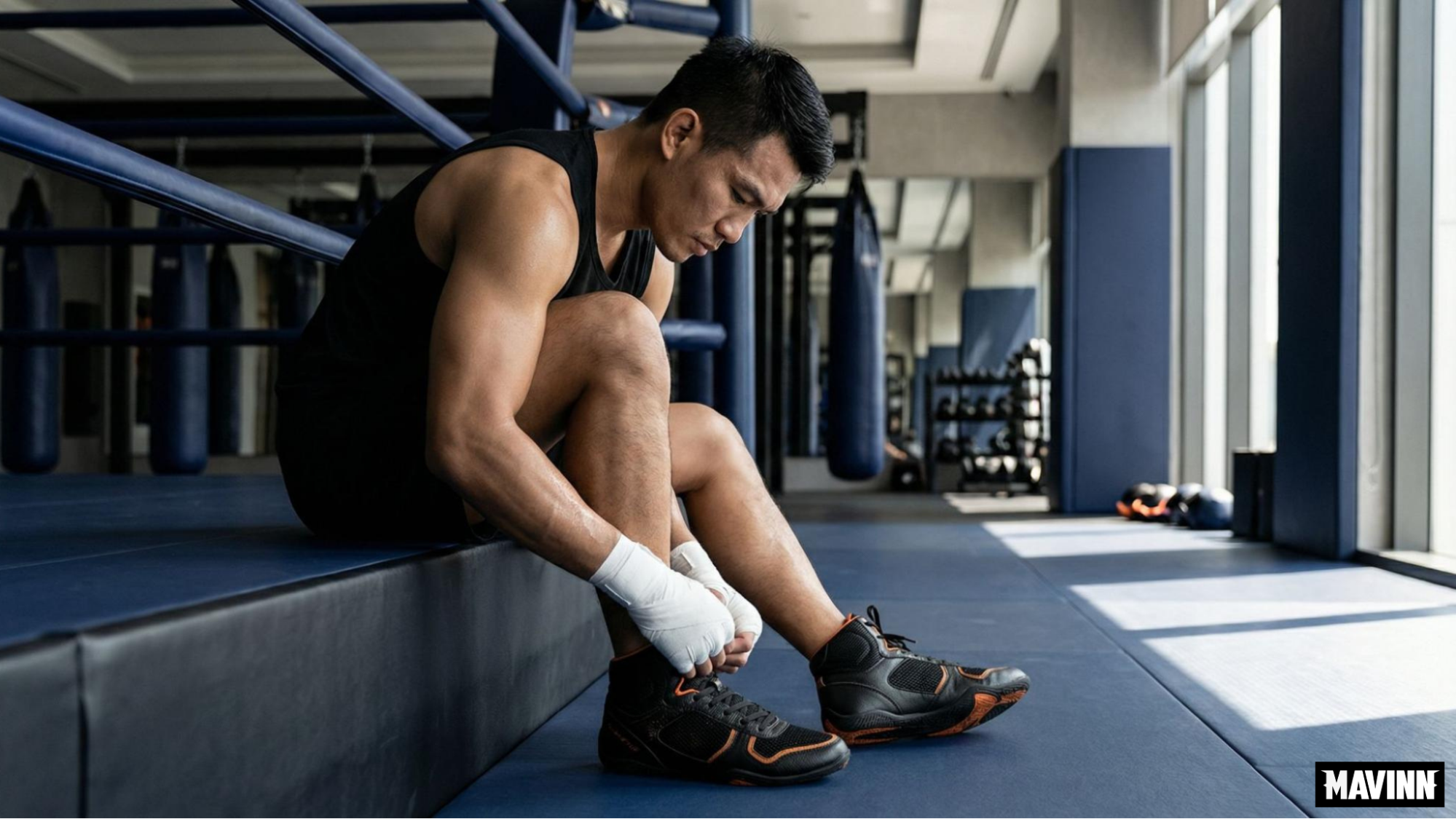
You should wear muay thai shoes if you train on abrasive mats, struggle with ankle instability, or want to avoid skin infections common in shared gym spaces. While traditionalists often train barefoot, specialized footwear provides the necessary grip to prevent your lead foot from sliding during high-torque roundhouse kicks. Many practitioners use them to protect their feet from the repetitive friction of high-volume heavy bag work.
-
Lateral reinforcement stabilizes the ankle joint during explosive 360-degree pivots.
-
Thin, non-slip outsoles maintain a natural tactile feel of the floor for precise balance.
-
Protective barriers shield the skin from friction burns and mat-borne bacteria like staph.
These shoes offer a modern solution for athletes who demand technical performance without sacrificing a sharp, street-inspired aesthetic. A low-profile fit keeps your center of gravity stable while throwing knees or elbows. Professionals often wear them during long training camps to reduce micro-trauma to the metatarsal bones and extend their career longevity.
5 Best Muay Thai shoes for all types of training

Choosing the right Muay Thai shoes depends on your training environment, focusing on thin outsoles that allow you to feel the floor during high-torque pivots. Low-profile designs provide essential ankle stability without sacrificing the flexibility needed for rapid roundhouse kicks. Proper shoes for muay thai protect your feet from friction burns during high-volume sessions on abrasive gym mats.
The best options combine technical durability with a modern street aesthetic, ensuring muay thai footwear performs in the ring and looks sharp outside it. For instance, shoes featuring reinforced side-stitching are specifically designed to withstand the intense lateral force of explosive 360-degree movements. Most professional gyms now suggest gum rubber soles for the best balance of traction and pivot speed on vinyl surfaces.
| Shoe Type | Best For | Key Feature |
|---|---|---|
| Hybrid Training Shoe | Street-to-Gym Versatility | Reinforced side stitching |
| High-Top Sparring Boot | Professional Sparring | High-top ankle stability |
| Gum Rubber Sole Shoe | Mat Traction & Grip | Gum rubber outsoles |
| Cushioned Bag Shoe | Heavy Bag Work | Shock-absorbing mid-sole |
| Lightweight Mesh Shoe | Fast Footwork & Pivots | Ultra-lightweight mesh |
-
Running shoes for essential roadwork
Roadwork builds the gas tank you need to utilize your muay thai shoes effectively during high-intensity rounds. You should prioritize high-rebound cushioning to protect your joints from the repetitive impact of concrete surfaces. A shoe with a low heel drop offers the ideal balance between calf engagement and shock absorption for daily runs.
To ensure stability and prevent leg fatigue before hitting the gym, look for trainers with these key features:
-
High-abrasion outsoles Provides consistent grip on wet asphalt.
-
EVA foam midsoles Lightweight cushioning to protect against shin splints.
-
Rigid heel counters Minimizes foot slippage during explosive hill sprints.
-
Training shoes for strength and conditioning
Strength and conditioning require a stable, flat base to ensure maximum power transfer during lifts like squats and deadlifts. While muay thai shoes excel in the ring, they often lack the lateral reinforcement needed for heavy plyometric drills or multi-directional lunges. A cross-trainer with a low heel-to-toe drop helps maintain a natural foot position.
Look for shoes with high-density foam in the heel to prevent compression under heavy loads. A wide toe box allows your toes to splay, which improves your overall balance during explosive medicine ball throws. These shoes should also feature a textured rubber outsole to prevent slipping on gym turf or rubber mats.
Choose a hybrid design that bridges the gap between technical performance and durability:
-
High-density heel foam Prevents compression under heavy loads.
-
Wide toe box Allows toes to splay, improving overall balance.
-
Textured rubber & TPU wraps Prevents slipping and protects the shoe during abrasive floor work.
-
Wrestling shoes for better mat grip
Wrestling shoes provide a high-friction rubber outsole that anchors your stance on canvas or vinyl mats, preventing the micro-slips that kill power during a pivot. These shoes feature a thin, tactile profile that allows your feet to sense the surface, which is critical for the explosive footwork required in combat sports. High-top designs provide essential ankle support to protect against rolls during deep lunges or sudden level changes.
Choosing high-performance muay thai shoes with a gum rubber finish ensures you maintain traction even when the mat becomes slick with sweat or humidity. Look for "strobeled" construction where the upper is stitched directly to the sole to prevent delamination during high-torque movements like roundhouse kicks. A secure lace-up system combined with a lace-guard prevents your footwear from coming loose or scratching your partner during long sparring sessions.
-
Boxing boots for extra ankle support
Boxing boots provide superior lateral stability through high-top collars that physically restrict excessive ankle inversion during explosive pivots. This structural support is vital for athletes recovering from joint strains or those performing high-volume footwork drills on dense canvas. Look for designs that utilize non-stretch synthetic overlays to maintain a secure fit throughout your entire workout.
While traditional muay thai shoes often emphasize maximum flexibility for roundhouse kicks, boxing-style variants offer a rigid heel counter to prevent the foot from sliding. These boots feature a secure lace-to-toe system that allows you to customize compression levels based on your specific ankle width. Modern hybrids now incorporate breathable mesh panels to ensure your feet stay dry during long technical sparring sessions.
-
Indoor Muay Thai footwear for home gyms
Indoor training demands a low-profile sole that mimics a barefoot feel while providing a protective barrier against cold or abrasive surfaces. If your home gym uses standard EVA foam puzzle mats, traditional barefoot training often causes friction burns during high-repetition kick drills. Selecting muay thai shoes with a slim gum rubber outsole ensures you can pivot 180 degrees without the shoe "grabbing" the mat and straining your knee.
Prioritize these features for a residential setup:
-
Non-marking outsoles to keep your home flooring free of permanent black scuff marks.
-
Breathable microfiber uppers that prevent heat buildup during high-intensity shadowboxing sessions.
-
Split-sole construction for maximum arch flexibility when transitioning from heavy bag work to core conditioning.
These designs bridge the gap between technical performance and street-ready style for athletes who prioritize functional support. They provide a stable base for explosive movements without the bulk of traditional cross-trainers. Each pair is built to withstand the high-torque demands of roundhouse kicks while maintaining a lightweight profile for agility.
Difference between boxing boots and wrestling shoes for muay thai
The primary difference lies in the outsole traction and ankle rigidity required for specific combat movements. Boxing boots feature a stiffer heel and smoother soles designed for rapid pivots, whereas wrestling shoes prioritize high-grip rubber to help you drive forward during takedowns. For practitioners using muay thai shoes, finding a balance is critical to ensure you don't "stick" to the mat during a kick, which can torque the knee.
| Feature | Boxing Boots | Wrestling Shoes |
|---|---|---|
| Ankle Profile | High/Rigid support | Mid/High flexible wrap |
| Outsole Grip | Low (Optimized for pivots) | High (Optimized for drive) |
| Flexibility | Moderate (Stiffer base) | Maximum (Split-sole design) |
| Primary Use | Punching-heavy movement | Clinch and mat grappling |
Choose a boxing-style hybrid if your style relies on explosive footwork and heavy punching combinations on canvas. These designs offer a locked-in fit that prevents your foot from sliding inside the shoe during high-impact strikes. If your gym uses soft foam mats, a thinner wrestling-style sole provides the barefoot feel needed to maintain balance during teeps and high kicks.
Key features to look for when buying Muay Thai shoes

The most critical feature for muay thai shoes is a low-profile outsole that balances grip with the ability to pivot effortlessly. Excessive traction can lock your foot to the mat during a roundhouse kick, putting dangerous torque on your knee joint. Look for smooth rubber patterns or pivot points under the ball of the foot to ensure fluid rotation.
-
Choose a mid-cut design that provides lateral stability for footwork without restricting the flexibility needed for high kicks.
-
Microfiber uppers reduce weight to prevent leg fatigue during extended sessions and allow for faster strike recovery.
-
Seek double-stitched overlays that withstand the high friction of dragging your rear foot during a power cross.
-
A minimal stack height improves your ground feel, which is essential for maintaining balance while standing on one leg.
Durability is a major factor since constant lateral movement and toe-dragging wear down standard athletic sneakers quickly. Look for sidewall reinforcement where the upper meets the sole to prevent the shoe from splitting during heavy bag work. High-quality muay thai shoes should maintain their structural integrity through months of consistent training.
Conclusion
Muay Thai shoes bridge the gap between traditional barefoot training and the technical demands of modern gym surfaces. They provide essential ankle stability and a thin, non-slip sole for high-torque pivots without risking knee strain. Each pair protects your skin from friction burns and common mat-borne bacteria like staph.
Selecting the right Muay Thai shoe keeps your footwork sharp and protects against mat friction through every training session. For complete foot and ankle protection, explore MAVINN's ankle guards and full combat collection — built for fighters who train at full intensity.