Muay Thai vs Jiu Jitsu: Which Should You Train?
Key Takeaways
-
Comparing Jiu Jitsu vs Muay Thai comes down to how each art solves the same problem: Muay Thai controls distance with strikes, while Brazilian Jiu-Jitsu controls position on the ground. Between Muay Thai vs Jiu Jitsu for self defense, staying on your feet often matters more. As for Jiu Jitsu vs Muay Thai for fitness, this depends on whether you want high-intensity striking conditioning or sustained grip and core work. Train at MAVINN's Thailand Muay Thai training camp in Pattaya, with your first session free.

Both Muay Thai and Brazilian Jiu-Jitsu aim to provide safety in a fight, yet they employ nearly contrasting approaches. One fighter uses strikes to manage distance and fight from afar, while the other controls the ground with dominant positions and submission holds.
The selection is significant for individuals engaged in training for self-defence, weight reduction, or overall physical conditioning, as each discipline moulds the body uniquely and fosters distinct innate responses. Understanding the strengths of each style enables you to align the training environment and coaching with your desired outcome.
Table of Contents
- Key Takeaways
- Muay Thai vs Jiu Jitsu: Striking Art vs Grappling Art
- Which Is Better for Self Defence
- Which Builds Better Fitness and Conditioning
- Why Train Muay Thai at Its Source
- Why Choose MAVINN Muay Thai Pattaya
- Train at MAVINN Muay Thai Pattaya Today
- References
- Frequently Asked Questions About Muay Thai vs Jiu Jitsu
Muay Thai vs Jiu Jitsu: Striking Art vs Grappling Art
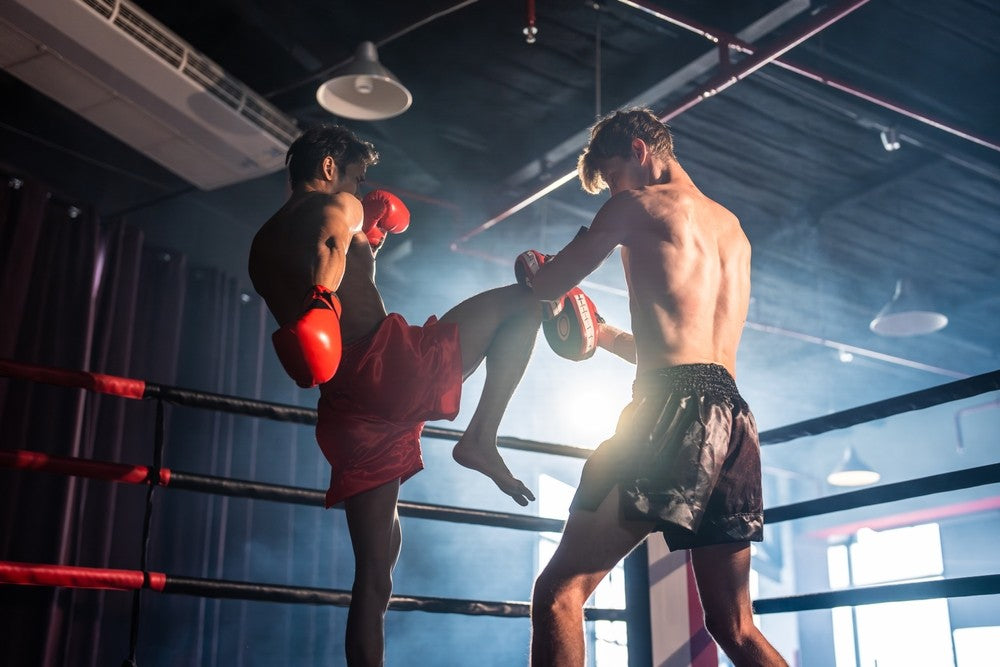
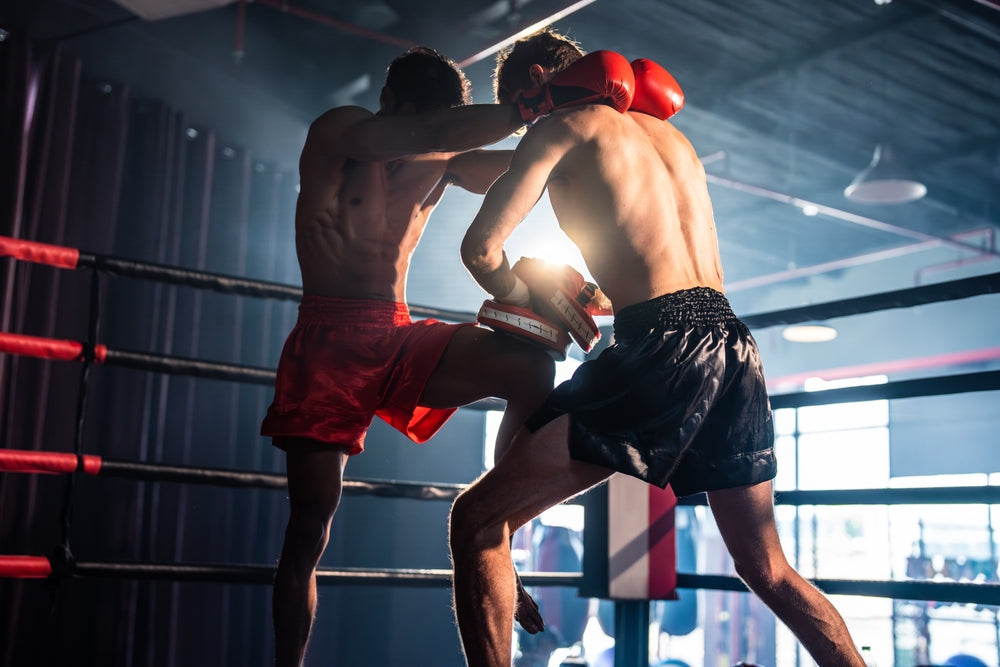
The core split between Brazilian Jiu Jitsu vs Muay Thai is where each art wants the fight to happen. Muay Thai is a stand-up striking art that uses fists, elbows, knees and shins, earning it the name "the art of eight limbs". Brazilian Jiu-Jitsu focuses on ground control, submissions and leverage rather than striking.
That difference shapes almost everything about how each art is trained:
-
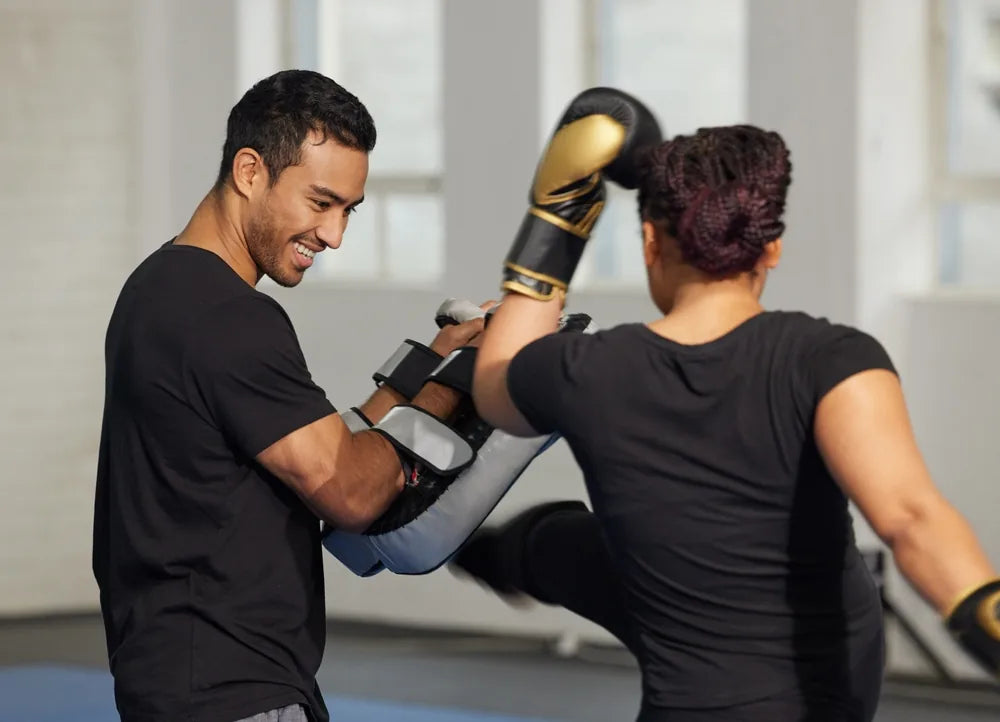
Muay Thai training: centres on pad work, bag work, technical drilling and clinch sparring, with rounds structured around striking intervals.
-
Brazilian Jiu-Jitsu training: centres on positional drilling and live rolling, with sessions built around sustained ground exchanges.
-
Gear needed: gloves, shin guards, shorts and hand wraps for Muay Thai; a gi or rash guard and shorts for BJJ.
-
Contact model: Muay Thai uses controlled striking intensity in sparring; BJJ allows near-full intensity in rolling, since submissions can be tapped safely.
Neither art is complete alone, which is why many fighters cross-train both, particularly for MMA.
Which Is Better for Self Defence
When choosing between Muay Thai vs Jiu Jitsu for self defense, the right choice depends on the situation you want to prepare for. Real confrontations rarely stay in one range for long, so each art has clear strengths and gaps.
-
Muay Thai strengths: striking range, powerful clinch control and the ability to disengage and stay on your feet. Elbows and knees at close range are effective in a real confrontation.
-
BJJ strengths: ground control, submissions and the ability to neutralise a physically stronger attacker once the fight goes to the floor, which is a common real-world outcome.
-
Multiple attackers: generally favour staying upright, which points toward Muay Thai's range management over BJJ's ground control.
-
Situational awareness: both arts build the composure to think under pressure, which often matters more than technique alone.
The most complete preparation typically draws on principles from both arts rather than picking one exclusively.
Which Builds Better Fitness and Conditioning
Besides self-defence, Jiu Jitsu vs Muay Thai for fitness is another legitimate comparison, and the right choice likewise depends on the kind of conditioning you want. While both activities burn calories at a comparable rate when performed at a steady intensity, they differ significantly in the muscle groups they engage and the energy systems they develop.
-
Muay Thai conditioning: rounds built around high-intensity striking intervals develop cardiovascular endurance, explosive power and shoulder endurance.
-
BJJ conditioning: relies on grip strength, core stability and muscular endurance from sustained positional control, with less emphasis on cardiovascular peaks.
-
Coordination and reflexes: Muay Thai's pad and bag work builds hand-eye coordination and reflexes that carry over to general athleticism.
-
Recovery load: BJJ tends to be lower-impact on joints; Muay Thai's shin conditioning and impact work carry a steeper physical toll.
If you want lean strength and grip, BJJ delivers it. If you want cardiovascular power and striking-shaped fitness, Muay Thai does that better.

Why Train Muay Thai at Its Source
Learning Muay Thai in Thailand means training under coaches who came up through the sport's competitive Lumpinee and Rajadamnern circuits, where the sport was shaped over generations. That coaching lineage is difficult to replicate in gyms outside Thailand.
Full-time camps integrate daily technical training, conditioning, clinch work, and recovery practices that mirror those of professional fighters. Training with different sparring partners and coaches throughout the week significantly accelerates skill acquisition compared to sporadic weekly classes.
Why Choose MAVINN Muay Thai Pattaya
MAVINN Muay Thai Pattaya brings championship-level coaching to every session. The gym is endorsed by Saenchai, widely regarded as one of the greatest Muay Thai fighters of all time, with head trainers Namsaknoi and Kaolan leading the technical programme.
The facilities cater to both long-term training and brief visits, offering Muay Thai, boxing, and MMA classes throughout the week. This training program includes strength and conditioning workouts utilising specialised equipment, as well as access to the gym for self-directed practice and skill refinement. For optimal relaxation, guests can also utilise a pool, sauna, ice bath, and a comprehensive recovery area.
Regarding the schedule, the gym offers training six days a week and includes one day for rest. We provide passes, starting with a complimentary introductory session, and extending to single-day, weekly, and monthly options to suit diverse schedules and preferences.
Train at MAVINN Muay Thai Pattaya Today
Muay Thai and Brazilian Jiu-Jitsu are each self-sufficient martial arts, developed from distinct traditions to address unique challenges. Muay Thai is ideal for individuals who enjoy striking, managing distance, and rigorous conditioning. In contrast, Jiu Jitsu appeals to those who favour solving positional challenges, maintaining control, and utilising techniques based on leverage. Ultimately, the best decision hinges on the training style you truly prefer most weeks, rather than on which martial art is superior in an objective sense.
If you are eager to pick up Muay Thai for the first time or extend an existing training background, learning at the source under coaches with Lumpinee-circuit experience shapes technique in the most meaningful way. At MAVINN, our Pattaya camp is built to accommodate both, with facilities that support full training loads and recovery in the same space.
Explore MAVINN's Thailand Muay Thai training camp today. Train under Namsaknoi and Kaolan in Pattaya, with your first session free and flexible single-day, weekly and monthly passes available.
References
- International Federation of Muaythai Associations (IFMA). Retrieved August 14, 2026, from https://muaythai.sport/
- International Brazilian Jiu-Jitsu Federation (IBJJF). Retrieved August 14, 2026, from https://ibjjf.com/
Frequently Asked Questions About Muay Thai vs Jiu Jitsu
Muay Thai vs Brazilian Jiu-Jitsu Comparison: What Are The Key Differences?
Muay Thai is a stand-up striking art using fists, elbows, knees and shins, while Brazilian Jiu-Jitsu is a grappling art focused on ground control, positional dominance and submissions. Training structure, gear and sparring style differ accordingly across the two.
What Is The Difference Between Muay Thai And Jiu Jitsu?
Muay Thai keeps the fight standing and uses eight striking surfaces, whereas Jiu Jitsu takes the fight to the ground and uses leverage, position and submissions rather than strikes. One controls distance, the other controls position.
Is Muay Thai Or Jiu Jitsu Better For Self Defence?
Muay Thai suits situations where staying on your feet matters most, particularly against multiple attackers or in confined spaces. BJJ suits confrontations that end up on the ground, a common real-world outcome. The most complete preparation draws on both.
Which Is Better For Fitness, Muay Thai Or Jiu Jitsu?
Muay Thai builds cardiovascular endurance, explosive power and coordination through striking intervals. Jiu Jitsu builds grip strength, core stability and muscular endurance through sustained positional work. Calorie burn is comparable at consistent intensity.
Can A Beginner Train Muay Thai In Thailand?
Yes. Reputable Thai camps run beginner-friendly classes alongside more advanced sessions, with coaches used to teaching international students from their first session. A short stay of one to two weeks is enough to build a solid technical foundation.