Thailand Muay Thai History Across 700 Years
Key Takeaways
-
Thailand muay thai history - Originating in the Sukhothai era as a battlefield survival tactic, the "Art of Eight Limbs" transformed the human body into a diverse arsenal of fists, elbows, knees, and shins to defend the kingdom.
-
Legendary figures such as King Naresuan the Great and Nai Khanom Tom solidified the discipline's cultural importance, proving its effectiveness against foreign invaders and in trials of individual resilience.
-
The 1920s marked a pivotal shift from lethal military combat to a regulated global sport by replacing traditional hemp-rope wraps with leather gloves and introducing standardized rings.
-
Modern professional standards were established with the 1945 opening of Rajadamnern Stadium, codifying the five-round format and weight classes that define the high-performance sport today.
Thailand muay thai history originated during the Sukhothai era as a vital survival skill for soldiers defending the kingdom’s borders. This combat system, famously called the "Art of Eight Limbs," transforms the human body into a versatile arsenal of fists, elbows, knees, and shins. Ancient warriors like King Naresuan the Great relied on these tactics to secure Thailand's independence in the 16th century.
The transition from battlefield survival to a regulated global sport occurred in the 1920s with the introduction of gloves and rings. These modern safety standards replaced the lethal hemp rope wraps used by legendary figures like Nai Khanom Tom. MAVINN continues this legacy by creating gear that bridges the gap between traditional toughness and modern street style.
Table of Contents
- Key Takeaways
- What makes thailand muay thai history a unique story of survival ?
- Where did Thai fighting actually begin in thailand muay thai history ?
- Transitioning to the ring Thai kickboxing and modern thailand muay thai history
- Sejarah Muay Thai The evolution of techniques and Wai Kru rituals
- Global expansion and the future of thailand muay thai history
- From ancient battlefields to modern rings Gear up with MAVINN
- Conclusion
What makes thailand muay thai history a unique story of survival ?

Thailand muay thai history is a survival story because the art was forged as a primary defense mechanism for a kingdom constantly under siege. These techniques were essential battlefield skills designed to neutralize armed invaders when soldiers lost their weapons. This "Art of Eight Limbs" allowed warriors like King Naresuan the Great to secure national independence during the 16th century.
Survival shifted from the battlefield to the prison camp in the famous case of Nai Khanom Tom, who famously won his freedom by defeating ten elite fighters. This heritage of resilience defines the sport's identity, proving that the human body can endure and overcome overwhelming odds. This same spirit is evident in modern training, where mental toughness is just as critical as physical technique.
The 1920s marked a pivotal era when the discipline survived cultural shifts by adopting Western-style boxing rings and gloves. This evolution replaced lethal hemp rope wraps with safety standards that allowed the sport to flourish globally without losing its raw intensity. MAVINN bridges this gap by engineering gear that meets these high standards of durability while fitting a modern street aesthetic.
Is Muay Thai a martial art or is Muay Thai mixed martial arts ?
Muay Thai is a standalone martial art with a specific lineage, while mixed martial arts (MMA) is a competitive sport that integrates multiple fighting disciplines. Deeply rooted in thailand muay thai history, this "Art of Eight Limbs" was developed as a specialized combat system for the Siamese military. In contrast, MMA practitioners use Muay Thai striking as a core component of their broader toolkit alongside wrestling and Brazilian Jiu-Jitsu.
Modern MMA athletes frequently travel to Thailand to refine their striking, yet the two remain separate in rules and cultural heritage. Traditional Muay Thai matches follow five-round structures with a heavy emphasis on rhythm, scoring, and the Wai Kru ceremony. MAVINN gear is designed to withstand the high-impact clinch work and repetitive kicking drills unique to authentic Thai training.
| Feature | Muay Thai (Martial Art) | Mixed Martial Arts (MMA) |
|---|---|---|
| Origin | Standalone discipline from Thai history | Multi-discipline hybrid sport |
| Striking | 8 contact points (fists, elbows, knees, shins) | Varies (striking + grappling) |
| Ground Game | None; focuses on standing combat | Extensive (wrestling and submissions) |
| Equipment | 10oz gloves and traditional shorts | 4oz open-palm gloves and compression gear |
Where did Thai fighting actually begin in thailand muay thai history ?

Muay Thai traces its origins to the 13th-century Sukhothai Kingdom, where it functioned as a practical battlefield survival system for the Siamese army. Known originally as Muay Boran, this combat style was a necessity for soldiers who lost their weapons during close-quarters warfare. The earliest training manuals focused on using the entire body as a weapon to defend the sovereign borders of ancient Siam.
This brutal heritage is the foundation of thailand muay thai history, evolving from lethal military maneuvers into the formalized sport we recognize today. During the Ayutthaya period, King Naresuan the Great actively integrated the "Art of Eight Limbs" into standard military drills to ensure his troops could strike with shins, elbows, and knees. MAVINN honors this raw legacy through gear built for the grit of these ancient warriors while meeting the technical demands of modern street-style athletes.
Ancient foundations from the Sukhothai to the Ayutthaya periods
Thailand's history began on the battlefields of the Sukhothai era (1238–1438) as a survival system for Siamese soldiers. These origins trace back to Muay Boran, a raw combat style developed for close-quarters fighting when primary weapons were lost. These warriors turned their shins and elbows into high-impact tools to neutralize enemies on the front lines.
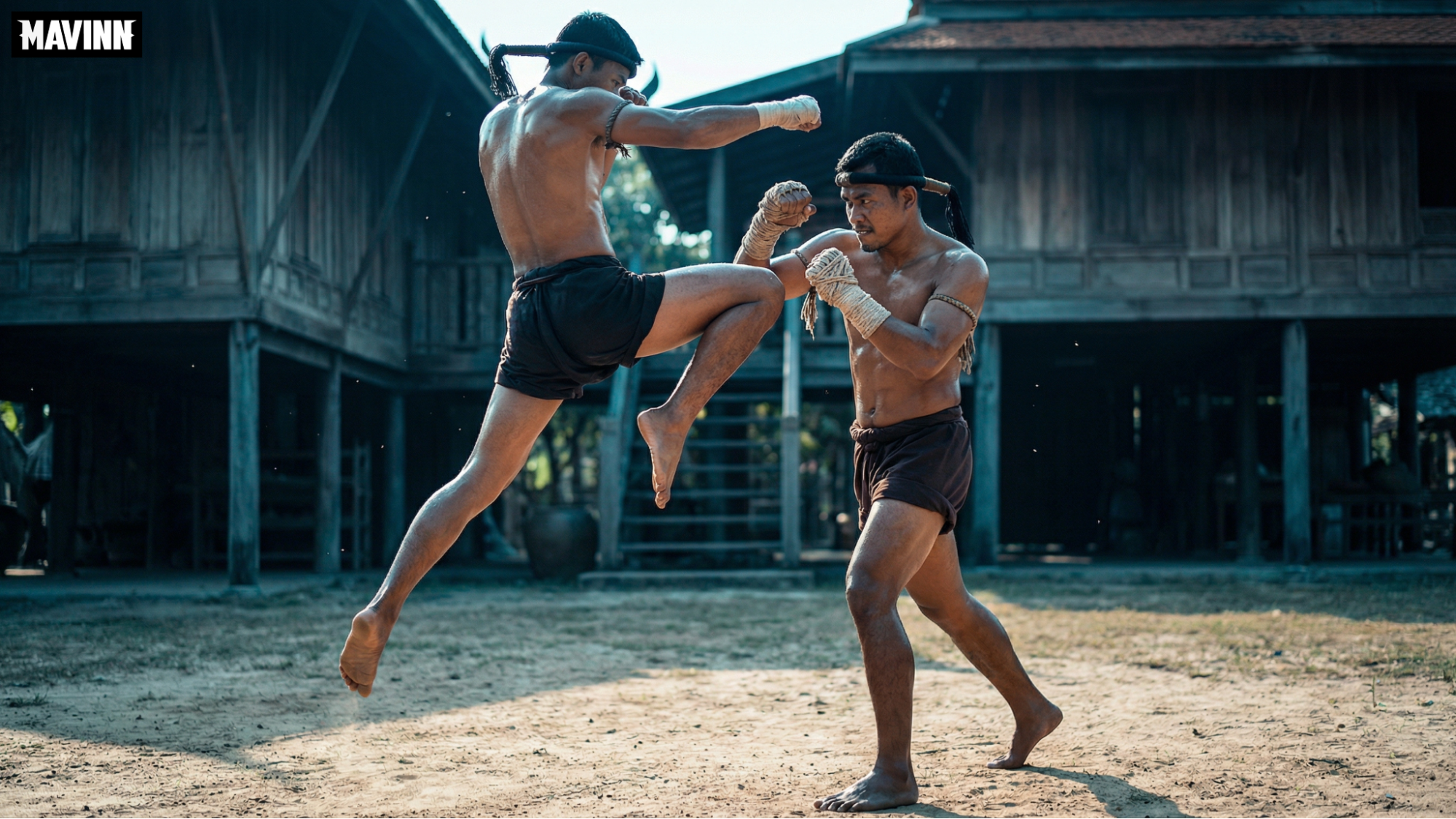
During the Ayutthaya period, the art shifted from a military necessity to a prestigious sport under royal patronage. Fighters replaced battlefield armor with hemp-wrapped hands and competed in temple courtyards during religious festivals. This era solidified the cultural importance of the sport, blending combat efficiency with spiritual rituals.
-
Soldiers used ground-based stances to maintain balance on uneven terrain during outdoor skirmishes.
-
King Naresuan integrated Muay Thai into the army’s core curriculum to improve troop combat efficiency.
-
Legendary figure Nai Khanom Tom proved the style's dominance in 1774 by defeating ten consecutive opponents.
The legendary era of the Tiger King and the birth of Muay Boran
King Prachao Sua, known as the "Tiger King," transformed thailand muay thai history by evolving the art from a military requirement into a highly technical national sport. He frequently disguised himself as a commoner to compete in village tournaments, testing his skills against the kingdom’s best fighters without the protection of his royal status. His legendary prowess led to the refinement of Muay Boran techniques, specifically the aggressive, explosive movements modeled after predatory animals.
This 18th-century era solidified the transition from battlefield survival to structured combat with distinct regional styles like Muay Korat and Muay Chaiya. Fighters applied kad chuek, or hemp-rope hand wraps, which allowed for lethal precision while providing basic protection for the knuckles. MAVINN draws inspiration from this uncompromising era of the Tiger King to create apparel that matches the intensity of those who train in the "Art of Eight Limbs" today.
Transitioning to the ring Thai kickboxing and modern thailand muay thai history

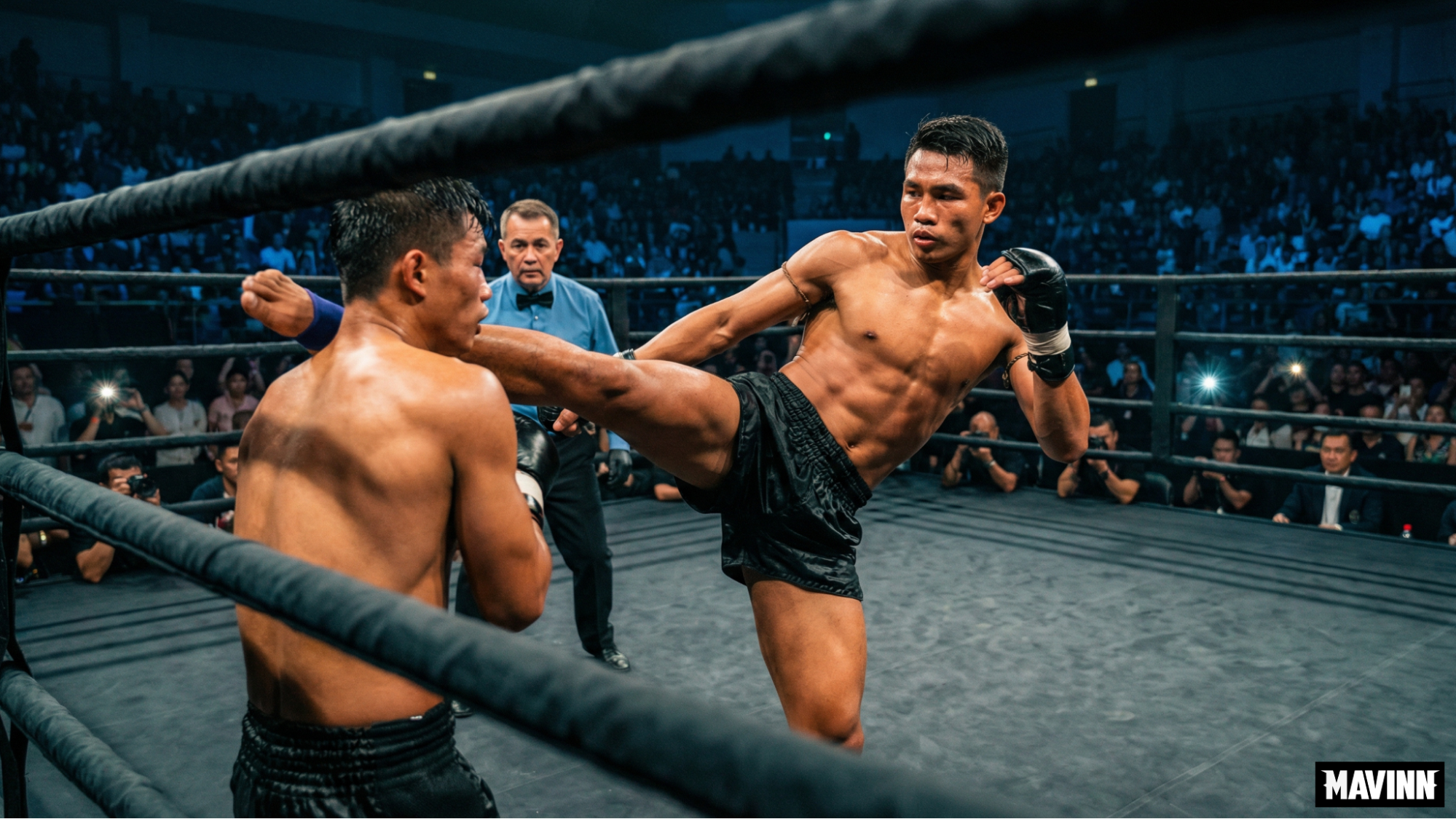
The transition from battlefield survival to a regulated ring sport began in the early 20th century as Western boxing influences reached Bangkok. By the 1920s, King Rama VII replaced the dangerous hemp-wrapped kad chuek with leather gloves to standardize safety and international appeal. This shift marked the birth of modern Thailand muay thai history, introducing essential structures like timed rounds, referees, and formal rings.
The 1930s marked the decade that solidified the sport's modern identity through codified rules and standardized weight classes. This era ended the practice of fighting until exhaustion, replacing it with the five-round format that remains the professional standard. The construction of Rajadamnern Stadium in 1945 provided a permanent home for the elite level of competition seen today.
Modern Thai kickboxing now fuses traditional Wai Kru rituals with high-performance gear designed for maximum mobility and strike protection. Fighters balance ancient techniques with sports science, making the Art of Eight Limbs a global powerhouse in the combat sports industry. This evolution ensures that current athletes maintain the lethality of the past within a regulated, professional framework of 135 to 147-pound championship divisions.
How the Rattanakosin era shaped thai muay thai rules and global standards
The Rattanakosin era turned a lethal combat system into a regulated international sport by formalizing rules that bridged the gap between tradition and safety. King Rama VII replaced hemp-rope wraps with leather gloves in the 1920s to align with global athletic standards. These changes established the modern framework of thailand muay thai history, moving the sport to the first modern boxing ring in 1929.
To align with international boxing protocols, authorities implemented several key structural changes:
- Transition from open ground to a raised square ring with padded ropes.
- Replacement of traditional water-clocks with five 3-minute rounds.
- Introduction of standardized weight classes to ensure fair competition.
These reforms prioritized athlete longevity while maintaining the core "Art of Eight Limbs" techniques. MAVINN designs gear that respects this evolution, meeting the elite standards set by the 1945 opening of Rajadamnern Stadium. Professional fighters now compete worldwide using these codified rules and standardized 10-ounce gloves.
The Golden Era: When thailand muay thai history reached its peak
The Golden Era of thailand muay thai history spanned the 1980s and mid-1990s, characterized by an unprecedented concentration of elite talent and technical brilliance. Legends such as Samart Payakaroon and Dieselnoi Chor Thanasukarn set the standard, often commanding significant fight purses at the height of their careers. This period transformed fighters into national icons, with technical "fimeu" styles reaching a level of sophistication that coaches still analyze today.
This era stands as the pinnacle of competition because it produced athletes who successfully transitioned between Muay Thai and Olympic-level boxing. Massive crowds filled Lumpinee and Rajadamnern stadiums daily, driving the demand for professional-grade equipment that could withstand the era's legendary clinch work and knee strikes. The high-stakes environment of the 1980s ensured that only the most versatile and durable strikers survived at the top of the 130-pound rankings.
Sejarah Muay Thai The evolution of techniques and Wai Kru rituals

Thailand muay thai history traces its evolution from the lethality of ancient battlefields to the high-performance sport we dominate today. You can see this progression in how the raw, explosive strikes of Muay Boran were refined into a technical system that rewards precision and timing. Modern techniques prioritize circular power and fluid footwork over the low-stanced, defensive guards used in 16th-century warfare.
The Wai Kru ritual remains the soul of the sport, acting as a psychological transition from civilian life to the warrior mindset. This ritual, combined with the Ram Muay, serves as a functional dynamic warm-up that increases joint mobility and mental focus. Every movement pays homage to the lineage of teachers while marking the fighter’s territory within the ring.
| Element | Ancient Era (Muay Boran) | Modern Era (Professional) |
|---|---|---|
| Stance | Low, wide, and grounded | High, narrow, and mobile |
| Protection | Hemp rope (Kard Chuek) | 8-10oz padded gloves |
| Primary Goal | Battlefield survival | Points and technical knockouts |
| Ritual Focus | Spiritual protection | Respect and athletic warm-up |
Global expansion and the future of thailand muay thai history
Thailand muay thai history has transitioned from local stadium culture into a dominant global force through mass media distribution and the rise of international promotions. Modern leagues now broadcast high-stakes strikes to a global audience, bringing the "Art of Eight Limbs" to mainstream audiences far beyond Southeast Asia. This surge in global interest has turned a traditional martial art into a core pillar of modern combat sports and performance-driven lifestyle fashion.
The future of the sport fuses elite athletic performance with street-ready aesthetics and digital-first training platforms. The industry is shifting toward hybrid gyms that prioritize both professional-grade striking and the culture of functional activewear. As the sport moves toward potential Olympic recognition, the industry is scaling rapidly to support the needs of thousands of registered Muay Thai gyms operating globally.
From ancient battlefields to modern rings Gear up with MAVINN
Thailand muay thai history tracks the evolution from 16th-century battlefield survival to the high-performance sport governed by modern athletic standards. MAVINN gear is designed to respect this legacy, bridging the gap between the raw power of Muay Boran and the technical requirements of the 1929 modern ring. This transition prioritized athlete longevity by replacing hemp rope wraps with standardized 10-ounce gloves and regulated weight classes.
Modern combat athletes require equipment that withstands the high-impact demands of training at elite levels. MAVINN gear meets the durability standards set by the 1945 opening of Rajadamnern Stadium. Every design blends traditional warrior aesthetics with contemporary streetwear functionality to support the fluid footwork and explosive power needed in the ring today.
| Feature | Ancient (Muay Boran) | Modern (Professional) |
|---|---|---|
| Protection | Hemp rope wraps | 8-10oz padded gloves |
| Goal | Battlefield lethality | Points and technical KOs |
| Timing | Traditional water-clocks | Five 3-minute rounds |
Conclusion
Thailand muay thai history reflects the survival of a kingdom, evolving from a raw battlefield necessity in the Sukhothai era to a sophisticated "Art of Eight Limbs." You can trace this transition from the lethal military tactics of King Naresuan to the legendary resilience shown by Nai Khanom Tom in 1774. These ancient roots established a culture where the human body serves as a versatile arsenal of eight distinct striking points.
The move toward a regulated global sport in the 1920s introduced leather gloves and rings, replacing traditional hemp wraps with modern safety standards. MAVINN honors this legacy by engineering gear that pairs the toughness of the 1945 Rajadamnern era with contemporary street aesthetics. Whether you are training for the ring or adopting the fighter’s lifestyle, your apparel carries the weight of a 700-year combat heritage. Browse MAVINN's boxing gloves and combat collection to carry this legacy into your training.