How to Start Muay Thai: The Beginner's 2026 Guide
Key Takeaways
-
how to start muay thai begins with researching local gyms and attending a trial class to ensure the coaching style aligns with your personal fitness or competitive goals.
-
Secure essential protection like quality hand wraps and quality gloves to safeguard the 27 small bones in your hand during repetitive bag work.
-
Build cardiovascular endurance through jump rope intervals and commit to training at least three times per week to allow your shins and muscles to safely adapt to the impact.
-
Prioritize mastering fundamental mechanics, including proper hip rotation and basic strikes like the jab and roundhouse kick, before attempting complex combinations or live sparring.
Learning how to start muay thai begins with finding a reputable gym and securing essential protection like quality hand wraps and gloves. MAVINN provides the high-performance combat gear and street-inspired apparel needed to bridge the gap between lifestyle and the ring.
Focus on building cardiovascular endurance by jumping rope for 15-minute intervals to prepare for the explosive energy demands of three-minute rounds. Prioritizing consistent footwork and basic strikes during your first month allows your shins and muscles to safely adapt to the physical impact.
Table of Contents
- Key Takeaways
- Can anyone do it ? Mindset tips on how to start Muay Thai
- Step 1 How to learn Muay Thai at a gym vs. at home
- Step 2 Essential techniques of Muay Thai for beginners
- Step 3 What gear do you need when learning how to start Muay Thai ?
- Step 4 Preparing your body and avoiding mistakes when learning how to start Muay Thai
- Your first Muay Thai for beginners session: What to expect
- Conclusion
Can anyone do it ? Mindset tips on how to start Muay Thai

Anyone can learn how to start muay thai regardless of their current age, weight, or athletic background. You do not need to be "in shape" to begin because the gym environment is designed to build your conditioning from the ground up. Most newcomers find their physical rhythm and coordination improve significantly within the first four weeks of consistent training.
-
Leave your ego at the door and focus on mastering fundamental mechanics like hip rotation and balance.
-
Commit to showing up at least three times per week to allow your shins and muscles to adapt to the impact.
-
Accept that minor physical discomfort is a normal part of the conditioning process as your body hardens.
-
Track your own incremental gains rather than comparing your progress to seasoned fighters with years of experience.
Quality protective gear supports this journey by offering professional-grade protection that fits a modern, street-inspired aesthetic. Success in combat sports is built on the discipline to repeat the same basic movements until they become instinctual. Mastering a clean roundhouse kick often requires thousands of repetitions on the heavy bag before it feels natural.
Step 1 How to learn Muay Thai at a gym vs. at home

Choosing how to learn muay thai effectively depends on whether you prioritize expert technical feedback or the convenience of a flexible schedule. Training at a gym is the gold standard because professional coaches identify minor technical flaws, such as dropping your guard during a kick, which prevents long-term injury. Most practitioners find that the accountability of a class environment leads to higher intensity levels during 60-minute sessions.
Home training offers a low-cost entry point for mastering basic movements like shadowboxing and footwork drills. While you lose the benefit of live sparring and pad work, you can focus on building a baseline level of cardiovascular fitness before stepping into a ring. Using professional quality hand wraps during home bag work protects your 27 small bones in the hand from repetitive impact.
| Feature | Training at a Gym | Training at Home |
|---|---|---|
| Coaching | Real-time correction from experts | Self-correction via mirrors or video |
| Equipment | Access to heavy bags, pads, and rings | Minimal gear (gloves and wraps) |
| Progression | Structured levels and live sparring | Self-paced fundamental drills |
| Community | High motivation and partner work | Solo focus and maximum convenience |
Step 2 Essential techniques of Muay Thai for beginners

You build your foundation by mastering the basic stance and the "Art of Eight Limbs," which utilizes your fists, elbows, knees, and shins. When learning how to start muay thai, you must prioritize a balanced guard where your hands stay at forehead level and your weight shifts slightly toward your back leg. This setup provides the stability needed to execute a lightning-fast lead jab or a heavy rear roundhouse kick. Effective beginners focus on maintaining this posture during every movement to ensure they are never caught off-balance.
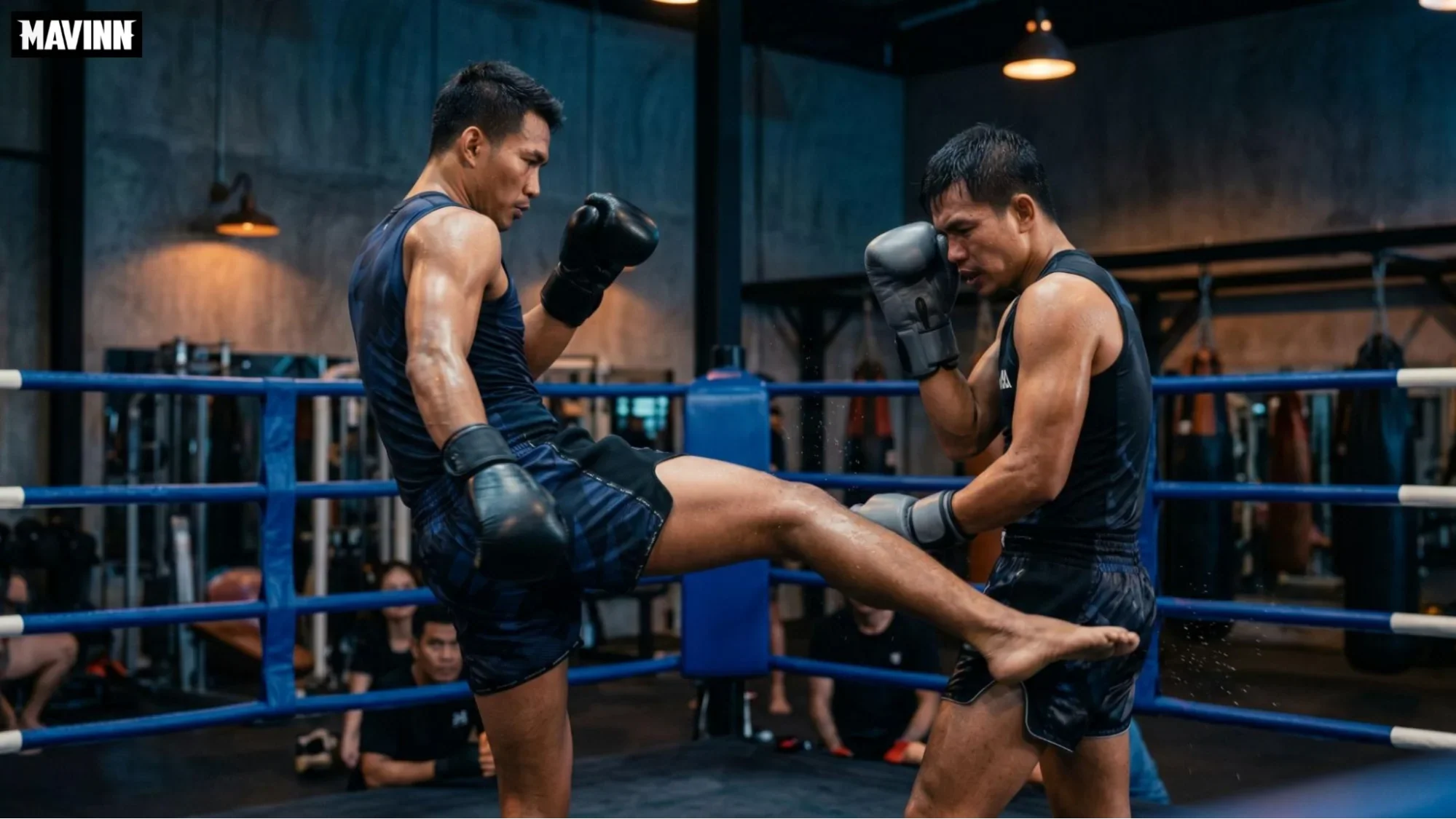
Power in Muay Thai comes from rotational force rather than raw arm strength, requiring you to pivot your lead foot during every strike. You will practice the "Muay Thai march," a rhythmic weight transfer that keeps you ready to check incoming low kicks or launch an immediate knee strike. Mastering the basic mechanics of a roundhouse kick often requires rotating your hips a full 180 degrees to drive through the target. Dedicated practitioners usually spend extended time training solely on these fundamental movements to build the muscle memory required for live sparring.
Finding your stance, rhythm, and defense basics
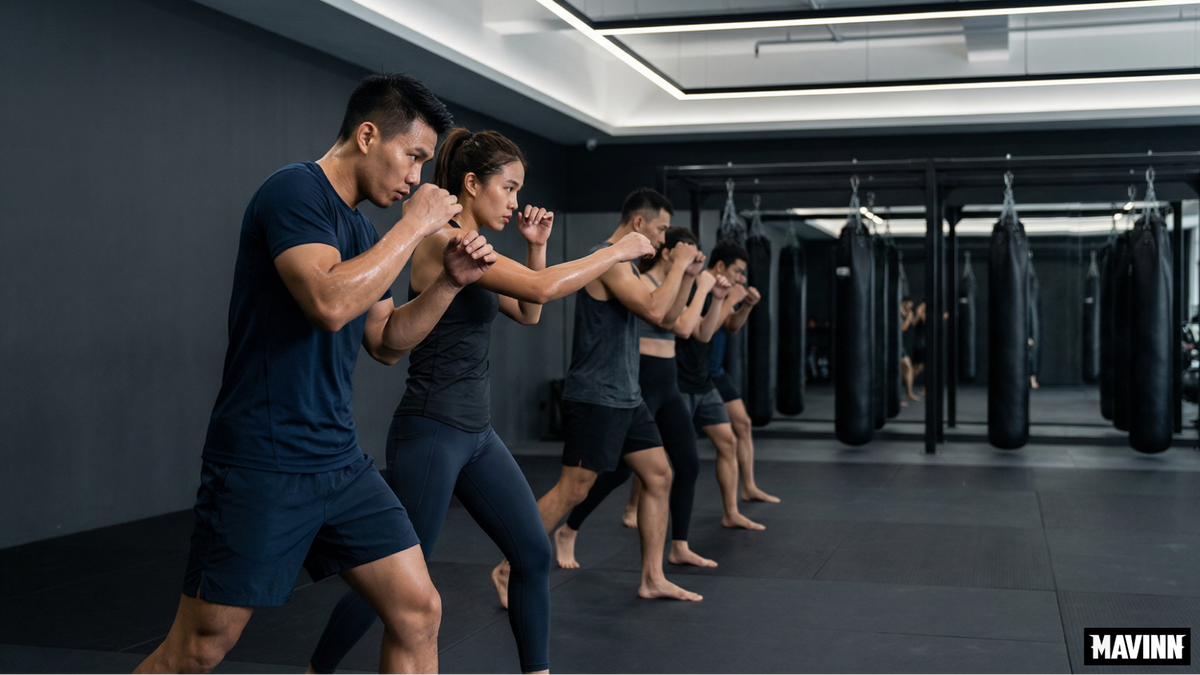
You establish a solid foundation by standing with your feet shoulder-width apart and your lead foot pointing directly at your target. Your rear foot should sit at a 45-degree angle to facilitate the hip rotation necessary for generating power in the "Art of Eight Limbs." This balanced posture ensures you remain mobile enough to attack while staying grounded enough to defend against incoming strikes.
When learning how to start muay thai, prioritize these fundamental mechanics:
-
Position your hands at forehead level with your palms facing inward to guard your temples.
-
Keep your elbows tucked close to your torso to shield your ribs from body kicks.
-
Adopt the "Muay Thai March," a subtle weight-shifting rhythm that keeps your feet active.
-
Tuck your chin to protect your jaw while maintaining clear vision of your opponent’s shoulders.
Mastering this rhythm allows you to check a leg kick or launch a counter-strike rapidly. Beginners who stay flat-footed struggle with balance, whereas a rhythmic stance utilizes the calf muscles as natural shock absorbers. This constant motion prevents you from telegraphing your movements during training.
Basic punches and kicks every new student should master
When learning how to start muay thai, you must prioritize the jab, cross, roundhouse kick, and teep. These four strikes are the building blocks of every combination you will ever throw. They teach you the essential mechanics of weight transfer and limb extension required for the Art of Eight Limbs.
-
Jab and Cross: These straight punches use your hips to drive power through your knuckles rather than just your shoulders.
-
Roundhouse Kick: You must pivot your standing foot and swing your shin like a bat to impact the target with your lower tibia.
-
Teep (Push Kick): This move acts as a "long guard" for your legs, using the ball of your foot to disrupt an opponent’s rhythm.
-
Lead Hook: Rotating your torso while keeping your arm at a 90-degree angle allows you to strike around an opponent’s guard.
You will likely spend considerable time repeating these movements to ensure your balance remains centered. Focus on returning your limbs to your defensive stance immediately after every strike. This discipline prevents you from leaving openings that more experienced practitioners can exploit during live drills.
Step 3 What gear do you need when learning how to start Muay Thai ?

Essential gear for how to start muay thai focuses on impact protection and joint stability to prevent early injuries. You must prioritize high-quality hand wraps and boxing gloves, as they safeguard the 27 small bones in your hand from repetitive stress. Investing in authentic Muay Thai shorts is equally vital, as their high-cut design provides the necessary range of motion for unrestricted roundhouse kicks.
| Gear Item | Primary Purpose | Recommended Specs |
|---|---|---|
| Boxing Gloves | Impact absorption | 12oz for pads/bags; 16oz for sparring |
| Hand Wraps | Wrist & knuckle support | 180-inch semi-elastic (Mexican style) |
| Shin Guards | Tibia & instep protection | High-density foam with secure Velcro straps |
| Mouthguard | Dental & jaw safety | Boil-and-bite or custom-fit silicone |
Quality gloves offer the best balance between protection and weight for conditioning drills. Your shin guards should feature a hook-and-loop closure system to prevent them from shifting during high-intensity "checking" exercises. Using quality wraps ensure you have enough length to create a thick padding layer over your knuckles and a firm "figure-eight" lock around your wrist.
Start strong with MAVINN recommended beginner gear
Selecting the right equipment is the first step in how to start muay thai without risking joint fatigue or impact injuries. You need gear that withstands high-velocity friction while offering the sharp, modern look of MAVINN street-inspired combat wear. Focus on these four essentials to build a solid training foundation:
-
Boxing Gloves: Essential for pad work; choose multi-layered foam to protect your knuckles from high-volume striking.
-
Muay Thai Shorts: Prioritize high-cut side slits and lightweight satin to ensure a full range of motion for roundhouse kicks.
-
quality hand wraps: Use semi-elastic wraps to create a stable "figure-eight" support around your wrist and thumb joints.
-
Shin Guards: Opt for high-density foam that covers the lower tibia and instep to safely "check" incoming kicks.
High-quality gear acts as a shock absorber for the 27 small bones in your hand during heavy bag sessions. Correctly fitted guards should not shift during a round of drills. Properly fitted gloves provide the best tactile feedback for learning the correct impact point on the knuckles.
Step 4 Preparing your body and avoiding mistakes when learning how to start Muay Thai

Building a baseline of cardiovascular endurance and hip mobility prevents the early burnout most beginners face in muay thai for beginners. Prioritize dynamic stretching and steady-state runs to prime your joints for the high-impact nature of "checking" kicks and explosive rotation. Integrating regular skipping rope sessions builds the specific calf endurance needed to stay on the balls of your feet during long striking combinations.
Avoid the common "ego trap" by focusing on technical precision and proper hip turn over raw power during your first month. Many newcomers overtrain and suffer from shin splints or rotator cuff strain because they ignore the body's need for gradual conditioning. Success requires balancing your intensity with at least two dedicated active recovery days per week to allow bone density and muscle tissue to adapt to the impact.
Your first Muay Thai for beginners session: What to expect

Your first session focuses on fundamental stance, basic strikes, and high-intensity conditioning rather than full-contact sparring. You will spend roughly 90 minutes learning how to rotate your hips for power while acclimating to the gym's high-energy environment. Knowing how to start muay thai begins with a rigorous warm-up involving shadowboxing and jumping rope to prime your cardiovascular system.
-
Dynamic Warm-up: Skipping and mobility drills to prep your joints for repetitive striking.
-
Basic Technique: Drills focused on the "square" stance and the four core weapons: jab, cross, teep, and roundhouse kick.
-
Pad Work: Partner drills using Thai pads to practice distance, timing, and impact accuracy.
-
Conditioning: A high-rep finisher of core work and bodyweight exercises to build functional combat strength.
Focus on technical precision rather than raw power to avoid early fatigue or minor muscle strains. Most newcomers find that their shins and forearms feel tender for a few days as bone density begins to adapt to the new impact. Mastering the basics requires at least three sessions per week to build the necessary muscle memory.
Conclusion
Learning how to start muay thai requires a balance of professional instruction and high-quality protective gear to prevent injury during your first months of practice. You should prioritize mastering your basic stance and hip rotation before attempting high-intensity sparring to allow your joints to adapt safely. Consistent training at least three times per week typically results in a noticeable improvement in coordination and conditioning within the first month.
Investing in high-density gloves and quality hand wraps ensures you protect the 27 small bones in your hand from repetitive heavy bag impact. Focus on technical precision over raw power to build a sustainable foundation in the Art of Eight Limbs, supporting your smooth transition from a newcomer to a disciplined practitioner.