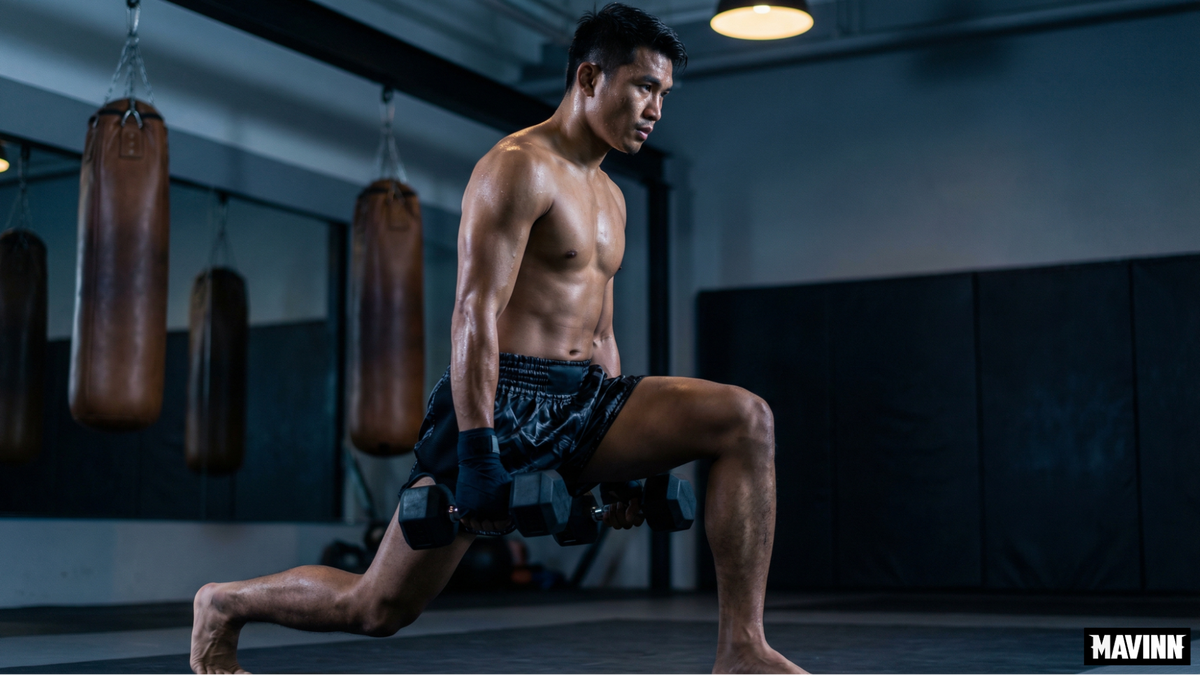
Muay Thai Training Program for 5 Days a Week
Key Takeaways
-
muay thai training program - A professional regimen balances high-intensity striking with technical clinching to build the explosive power and aerobic endurance needed for five-round intensity.
-
Progression relies on heavy bag work for raw power and precision pad work with a trainer to sharpen defensive timing, rhythm, and reactive speed.
-
Functional strength is developed through consistent roadwork and calisthenics, providing the core stability and hip rotation required for high-volume kicking drills.
-
Success demands a disciplined schedule and recovery protocols, including the use of reinforced apparel to protect the body during high-impact, 90-minute sessions.
A professional muay thai training program builds explosive power and aerobic endurance through high-intensity striking drills and technical clinching. Mixing heavy bag work with precision pad work sharpens your timing and keeps your heart rate in the anaerobic zone.
To support the core stability needed for knee strikes, this regimen incorporates consistent roadwork and calisthenics. Disciplined recovery and high-quality protective gear are essential to prevent injuries during these intense 90-minute sessions.
Table of Contents
- Key Takeaways
- Structuring your Muay Thai training schedule: 5 Days a Week
- Phase 1 The foundation Muay Thai program for absolute beginners
- Phase 2 Intermediate Muay Thai training program to enhance power
- Phase 3 Advanced Muay Thai training program for fight preparation
- Is a Muay Thai program safe and effective for kids and women ?
- How do you track progress and stay motivated in your Muay Thai training program ?
- Conclusion
Structuring your Muay Thai training schedule: 5 Days a Week

A standard muay thai training program typically requires adapting your sessions based on your physical condition and specific goals. To unlock explosive power and endurance safely, this structured 5-day regimen isolates specific attributes each day—from raw power generation to reactive speed—while incorporating dedicated active recovery for all levels.
| Day | Training Focus | Core Activities & Drills | Intensity Target |
|---|---|---|---|
| Day 1 | Foundation & Aerobic Base | 5km roadwork, 20 mins shadowboxing, basic pad work (focus on jab, cross, teep), core sit-ups. | Medium (Building rhythm and form) |
| Day 2 | Explosive Power | Heavy bag intervals (maximum-effort roundhouse kicks), plyometric broad jumps, heavy bag sprints. | High (85%+ Max HR, Anaerobic) |
| Day 3 | Active Recovery & Clinching | Light technical clinching (catch and release), neck ties, balance drills, stretching & mobility work. | Low-Medium (Focus on technique & repair) |
| Day 4 | Reactive Speed & Sparring | 5-hit bursts on pads (zero reset time), light technical sparring, counter-attack drills. | Medium-High (Fast-twitch engagement) |
| Day 5 | Fight Simulation & Burnout | 5-minute sparring rounds with fresh partners, continuous mid-kick burnout sets, medicine ball twists. | Very High (Peaking anaerobic threshold) |
Note: Beginners should start by completing Days 1, 2, and 3, allowing at least two full rest days. Advanced practitioners can execute all 5 days.
Structure your week by alternating high-intensity pad work with technical recovery days to prevent central nervous system fatigue. Keep at least one full day of rest to allow muscle tissue to repair and maintain explosive power. Using MAVINN reinforced apparel during these sessions provides the durability needed for the high-volume kicking drills that define a professional regimen.
Phase 1 The foundation Muay Thai program for absolute beginners

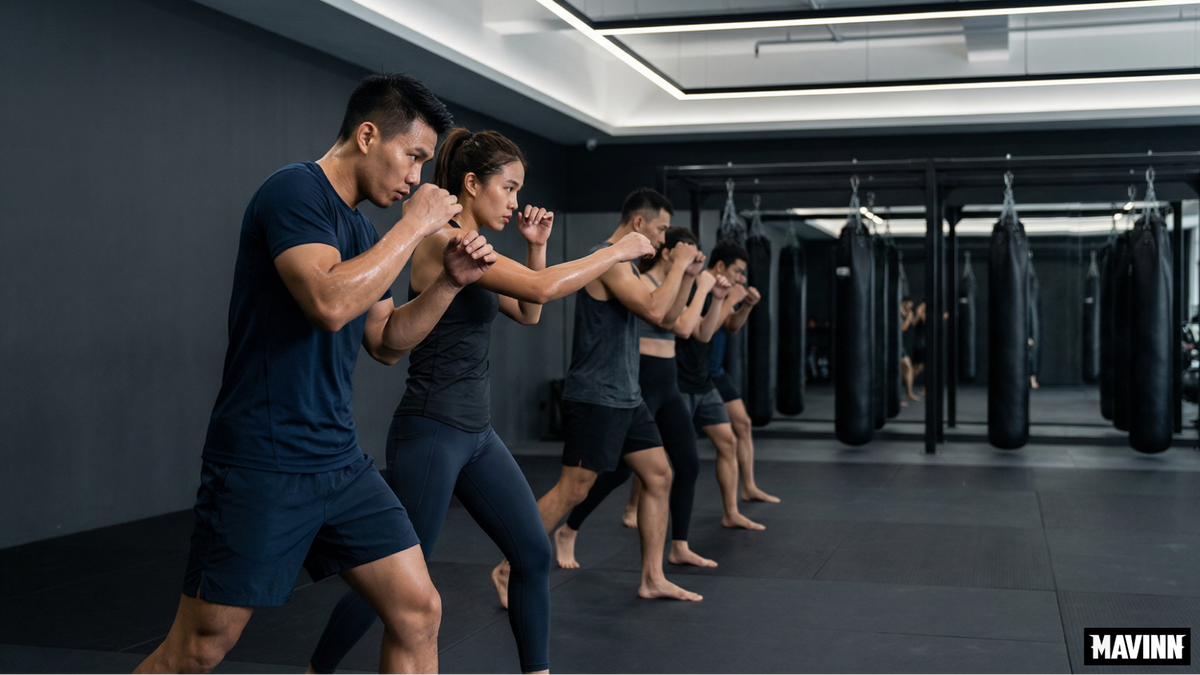
Starting a muay thai program as a beginner focuses entirely on mastering the stance and guard to provide a stable base for every strike. You will prioritize the balance between your lead and rear legs to ensure you can check kicks or throw a jab without losing your footing. Most introductory sessions dedicate the first 20 minutes to shadowboxing specifically to cement these motor patterns into muscle memory.
You will then progress to the four basic weapons: the jab, cross, teep, and the fundamental roundhouse kick. Technical precision over raw power is essential to prevent common novice injuries like shin splints or strained hip flexors. To support this transition, beginners should integrate basic core conditioning, targeting core sit-ups per session to build the rotational strength needed for effective kicking.
Mastering stance, footwork, and basic strikes
A successful muay thai training program begins with a square, balanced stance that enables immediate offensive and defensive transitions. You must distribute weight 50/50 between your lead and rear legs to remain light enough to check kicks while staying stable. This foundation prevents you from "falling" into strikes, a common error that leaves beginners vulnerable to counter-attacks.
-
Footwork: Move the lead foot first when going forward and the rear foot first when retreating to avoid crossing your legs.
-
Jab & Cross: Keep your chin tucked behind your punching shoulder and your opposite hand glued to your temple.
-
Teep (Push Kick): Use the ball of your foot to disrupt an opponent’s rhythm and maintain a safe striking distance.
-
Roundhouse Kick: Pivot your lead foot 45 to 90 degrees to open your hips and drive your shin through the target.
Technical precision in these four strikes builds the neurological pathways required for high-volume bag work. Practice these movements in front of a mirror to ensure your guard remains high during every hip rotation. Beginners who master these mechanics early avoid the hip flexor strain often caused by improper kicking form.
Building cardiovascular endurance and core strength
Build your gas tank by integrating 3-minute rounds of explosive interval work into your muay thai training program. Skipping rope and heavy bag sprints mimic the high-intensity bursts required during a live fight. This training method pushes your heart rate into the 85% max zone, developing the aerobic capacity needed to recover quickly between exchanges.
Core conditioning focuses on the rotational stability required to whip your hips into kicks and absorb heavy impact. You should prioritize dynamic movements like medicine ball twists and weighted sit-ups to build a midsection that acts as a protective shield. Consistently performing high-volume core-specific drills per session ensures you maintain structural integrity even under extreme fatigue.
Phase 2 Intermediate Muay Thai training program to enhance power

Power in an intermediate muay thai training program comes from mastering the kinetic chain and aggressive hip rotation rather than raw muscle strength. You must transition from simply hitting the target to driving through it by pivoting your support foot a full 90 to 180 degrees. This mechanical shift ensures your entire body mass translates into the point of impact, effectively turning a standard kick into a high-damage strike.
Heavy bag sessions should focus on "single-shot" quality to build the neurological pathways for maximum force. Perform multiple sets of maximum-effort roundhouse kicks, focusing on landing with the lower third of your shin for peak density. Integrating plyometric drills like broad jumps into your routine further sharpens the fast-twitch fibers required for explosive counter-attacks and heavy clinch knees.
Heavy bag drills and pad work for explosive combinations
Explosive combinations in a muay thai training program rely on "snap" and weight transfer rather than pushing through the target. Use the heavy bag to practice the double-tap method, where you throw a low-power range finder followed immediately by a maximum-effort power strike. This drill trains your nervous system to fire rapidly, cutting the transition time between a jab and a rear roundhouse kick.
Pad work shifts the focus to reactive speed and counter-explosiveness by forcing you to strike on mid-swing or immediately after a defensive parry. You should execute 5-hit bursts where the trainer provides zero reset time between the punch and the following kick or knee. This intensity mimics the chaotic pace of a real exchange, ensuring your fast-twitch muscle fibers remain engaged even when your heart rate spikes.
Introduction to clinching and light sparring
Clinching and light sparring bridge the gap between pad work and real combat by forcing you to apply techniques against a resisting opponent. You transition from choreographed drills to a fluid environment where maintaining balance and controlling the neck tie is the priority. A "catch and release" philosophy builds technical awareness without unnecessary impact.
Keep your output at low power to focus on reading your partner's movements and timing your counters. Practice tactical maneuvers like the off-balancing trip or an inside-thigh knee tap to disrupt your opponent’s stance. These live sessions expose defensive holes that hitting the heavy bag never reveals.
Phase 3 Advanced Muay Thai training program for fight preparation

Phase 3 of an advanced muay thai training program focuses on peaking your anaerobic threshold and finalizing tactical game plans. This phase transitions from volume-based strength to high-intensity, fight-simulated rounds. This stage ensures you possess the cardiovascular capacity to maintain a high work rate over five full rounds of professional action.
-
Fight-Specific Sparring: Perform 5-minute rounds with fresh partners rotating in every 60 seconds to test your defensive composure under extreme fatigue.
-
Power Endurance: Execute "burnout" sets on the pads, such as continuous mid-kicks followed by immediate clinch wrestling to simulate late-round scrambles.
-
Tactical Drilling: Refine counters against specific styles, such as using the long knee to intercept a pressure puncher or perfecting the teep to disrupt an aggressive kicker’s rhythm.
Is a Muay Thai program safe and effective for kids and women ?

A muay thai training program is exceptionally safe and effective for kids and women because the focus is on technical precision over raw impact. For children, the focus remains on "shadow drills" and coordination work to build spatial awareness and discipline without risking injury to developing joints. These sessions bridge the gap between physical fitness and mental focus through controlled, non-contact pad work.
Women find the program highly effective for building functional strength and burning significant calories per session. Tactical movements like the "long guard" and "teep" kick provide practical self-defense applications while toning the core and lower body. Every class at MAVINN balances high-intensity cardio with technical refinements to ensure you gain confidence and explosive power without unnecessary physical strain.
How do you track progress and stay motivated in your Muay Thai training program ?
You track progress in a muay thai training program by combining objective performance data with technical skill assessments. Monitor your recovery time between high-intensity rounds and document how quickly your heart rate drops back to a baseline level. Maintain a training log to record your weight, energy levels, and specific techniques mastered during each session.
Consistent motivation stems from setting performance-based goals rather than focusing solely on aesthetic changes. Film your pad work once a week to review your hip rotation and striking speed, which provides a tangible visual of your technical growth. This shift in focus from "working out" to "mastering a craft" ensures you stay mentally sharp for 5-round simulations.
-
Wearable Data: Use a heart rate monitor to ensure you reach peak heart rate during burnout sets while tracking your sleep quality for recovery.
-
Sparring Reviews: List three specific counters you successfully landed during live drills, such as catching a kick or timing a counter-cross.
-
Technical Milestones: Aim to progressively increase your continuous mid-kick count on the heavy bag over time.
Conclusion
A professional muay thai training program transforms your physical output by bridging technical precision with high-intensity anaerobic conditioning. You must prioritize the balance between explosive striking drills and disciplined recovery to avoid central nervous system fatigue. MAVINN provides the high-performance reinforced apparel required to endure high-impact kicking sets and sparring sessions.
Success in this discipline requires tracking specific metrics like your heart rate recovery and the speed of your double-tap combinations. Consistency over months—not weeks—builds the durability needed for the five-round intensity of professional combat. Master your stance, protect your shins with pro-grade gear, and commit to the daily grind of 5km roadwork.