How to Throw Muay Thai Knee Strikes in the Clinch
Key Takeaways
-
Muay Thai knee strikes draw their power from hip extension, not the leg swing, and land hardest at close range.
-
The clinch is where knees dominate, so posture and neck control matter as much as the strike itself.
-
A knee is one of the eight weapons in Muay Thai, alongside punches, kicks and elbows.
-
Catching heavy knees calls for full torso coverage, which is where a body protector beats a belly pad.
-
Explore the Body Shield Pro Series Muay Thai body protector at MAVINN for coverage built to absorb full-power knees and kicks.

From the ringside, Muay Thai knee strikes appear straightforward, as a raised knee thrust into the ribs. The force that causes it to land originates from the hips rather than the leg swing.
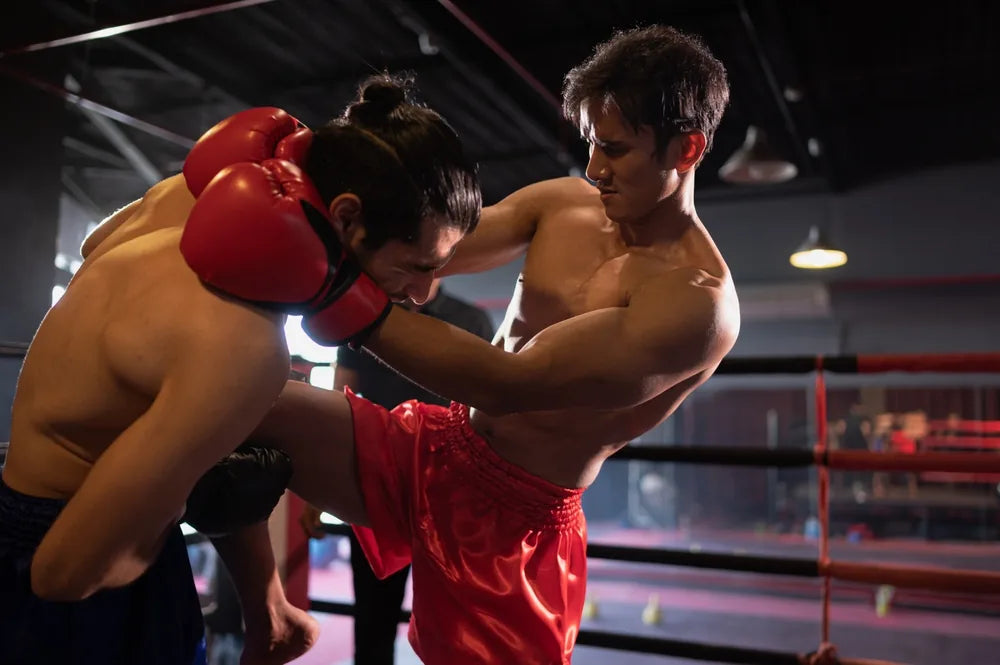
Knees are among the eight primary weapons in Muay Thai. They dominate in close quarters where there isn’t enough space for punches and kicks to land effectively. This turns them into the key factor in the clinch, where two fighters hold each other chest to chest with no room to back away.
Coaches endure the most frequent punishment within that same range. Incorrect protective equipment creates openings right where the knees take the most impact, so it’s important to grasp both technique and protection simultaneously.
Table of Contents
What are Muay Thai knee strikes?
In Thai, a knee is called khao, and it is one of the eight striking surfaces that give the sport its name, the art of eight limbs.
The knee strikes Muay Thai is built around come in a handful of recognised forms, each suited to a different range or angle.
-
Straight knee: driven straight up into the midsection from mid-range or the clinch, the foundation every beginner learns first.
-
Diagonal and curved knees: thrown at an angle into the ribs or flank to open gaps in a guard.
-
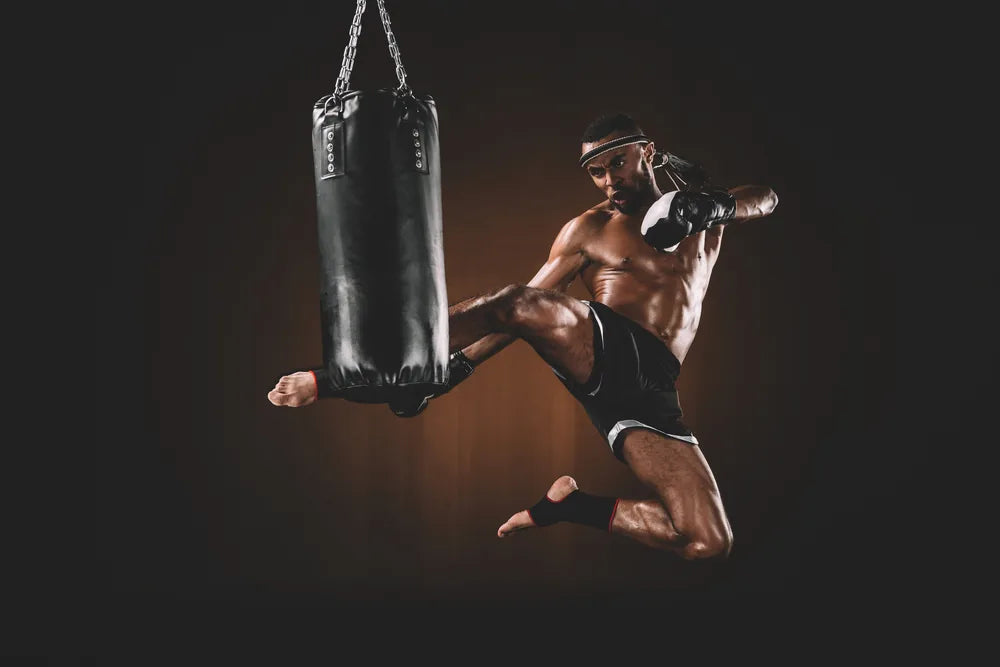
Jumping and short knees: an explosive flying knee for the head, or short sharp knees fired inside at close range.
Throughout all of them, the target areas remain consistent: the solar plexus, ribs, and floating ribs, where a precise knee strike affects breathing and balance. All variations have in common that the power originates from hip extension rather than leg swinging.
How do you throw a straight knee strike?
The straight knee, khao trong, follows a clear sequence that carries over to almost every other knee.
-
Set your base: stand balanced with guard hands at temple height, weight slightly forward and chin tucked.
-
Close the distance: pull the opponent's head or neck down in the clinch to break their posture and shorten the range.
-
Drive the hips: lift the rear knee and snap the hips forward at impact, since the hip thrust generates the force.
-
Stay covered: rise onto the ball of the standing foot, lean back slightly to clear a counter, and keep the rear hand at the temple.
-
Reset cleanly: retract the leg back behind the lead leg rather than letting it drop forward and leave you exposed.
Novices often extend their knees and end up losing their balance. Maintaining a high guard and driving the hips through the target corrects most of those initial errors and seamlessly transitions into the more challenging clinch techniques.
How to train clinch knee strikes
The clinch is where Muay Thai clinch knee strikes do the most damage, where a fighter controls the head and posture while unleashing knees with no room for the opponent to escape.
Structured Muay Thai clinch knee strikes training builds in stages:
-
Posture and neck control: hold collar-tie positions and square the hips under the shoulders before adding any knees.
-
Pummelling drills: alternate inside position on the neck and biceps to build the timing clinch work depends on.
-
Knee reps with control: one hand on the neck, one on the arm, throwing alternating knees while pulling the head down.
Coaches consistently emphasise one point: the goal is to hold a dominant, controlling position. A fighter who loses their stance is taken down and countered.

Body protector or belly pad: which do you need?
Catching heavy knees and kicks round after round puts real force through the torso. Body protectors and belly pads negate that, but they are built for different jobs.
-
Belly pad: covers the midsection only, which leaves the chest and upper ribs exposed to knees.
-
Body protector: covers the full torso, from chest and ribs down to the abdomen.
Compared to boxing, coverage matters more in Muay Thai as knees and kicks land harder and more often, so full coverage protects the zones most at risk. Mobility-wise, a belly pad is lighter, while a body protector is heavier but built for high-volume rounds.
In a gym that frequently practices clinch and knee techniques, the body protector is the safer choice since it shields the wearer from strikes that a belly pad isn’t meant to absorb.
Why coaches choose the MAVINN Body Shield Pro Series
For coaches holding through fight-camp rounds, the protector has to keep its shape and stay in place from the first knee to the last. Proper fit and build quality provides safe coverage against strikes throughout sessions.
The MAVINN Body Shield Pro Series is built specifically with that in mind, offering full torso coverage through multi-layer, high-density foam that shields the chest, ribs and abdomen together. The series also includes reinforced impact distribution that disperses force across the entire shield, supported by ergonomic shoulder and waist straps that keep the protector snug during quick combinations.
Combined with double-reinforced stitching, the series endures daily, heavy-use training sessions.
Shop the MAVINN body protector
The knee is one of Muay Thai’s core weapons, and gets its power from the hips. In the clinch it is controlled posture, not knee volume, that wins the exchange. Coaches catching those strikes need coverage that matches the intensity.
At MAVINN, our Muay Thai body protector was built for that gap, providing full torso coverage through multi-layer foam and a reinforced impact distribution system made for daily rounds. It is the protector our own coaches wear through full training weeks.
Explore the full-coverage Muay Thai body protectors at MAVINN today. Each Body Shield Pro Series protector uses ergonomic shoulder and waist straps to stay flush through fast combinations.
References
- Thai boxing. Retrieved on 22 September 2026 from https://www.britannica.com/sports/Thai-boxing
- International Federation of Muaythai Associations. Retrieved on 22 September 2026 from https://muaythai.sport/
- World Muaythai Council. Retrieved on 22 September 2026 from https://wmcmuaythai.org/
- Epidemiology of Muay Thai fight-related injuries. Retrieved on 22 September 2026 from https://pmc.ncbi.nlm.nih.gov/articles/PMC5149460/
Frequently Asked Questions About Muay Thai Knee Strikes
What are knee strikes in Muay Thai?
Knee strikes, or khao, are close-range strikes thrown by driving the knee into an opponent's body or head. They are one of Muay Thai's eight weapons and are most effective in the clinch, where the range is too tight for punches and kicks.
How to do knee strikes correctly?
Set a balanced stance with your guard up, pull the opponent's head or neck down to close the distance, then drive the rear knee up while snapping the hips forward at impact. The power comes from the hip thrust, not the leg swing, and you should reset the leg behind your lead foot rather than dropping it forward.
Body shield vs belly pad: what's the difference?
A body shield, or body protector, covers the full torso and is built for full-power knees, kicks and elbows. A belly pad covers only the abdomen, making it ideal for lighter pad work. However, for Muay Thai - where heavy kicks and knees land frequently - a full-body protector is essential to shield the chest and ribs that a belly pad leaves exposed..
Which leg should a straight knee be thrown with?
Almost always the rear leg. Front-leg knees do not generate enough hip drive to land a straight knee with real force, so the rear knee is the default for power from the clinch or mid-range.