The Elbow Strikes Muay Thai Fighters Rely On Most
Key Takeaways
-
Elbow strikes work best at clinch range or half a step outside it. Thrown from farther out, they telegraph and lose almost all their power.
-
Muay Thai names eight elbow strikes by the line each one travels, from the horizontal Sok Tat to the spinning Sok Klap, each suited to a different angle and distance.
-
Elbows account for the majority of lacerations in Muay Thai competition, but in-ring fatalities stay extremely rare under proper rules, referees, and medical supervision.
-
Drilling elbows safely starts with air drills and pad work, and a proper shin guard for boxing or Muay Thai sparring is standard kit before any full-contact round.
Throwing an elbow strike in Muay Thai takes more than swinging your arm hard. This guide covers how to throw an elbow strike properly, from the stance and rotation that generate power, through the named strikes every Nak Muay learns, to how effective an elbow strike actually is in a real fight. We will also cover the training safety habits that let you drill elbows without hurting your partner, straight from the coaches at MAVINN.

Table of Contents
- Why the Elbow Is Muay Thai's Sharpest Weapon
- Elbow Strike Fundamentals: Stance, Range, and Rotation
- How to Throw an Elbow Strike: Step by Step
- The Named Muay Thai Elbow Strikes
- Common Elbow Strike Mistakes
- How Effective Is an Elbow Strike in a Real Fight?
- Training and Safety: Drilling Elbows Without Injury
- Gear Up With MAVINN Before Full Sparring
-
Train Your Elbows at the MAVINN Pattaya Camp
Why the Elbow Is Muay Thai's Sharpest Weapon
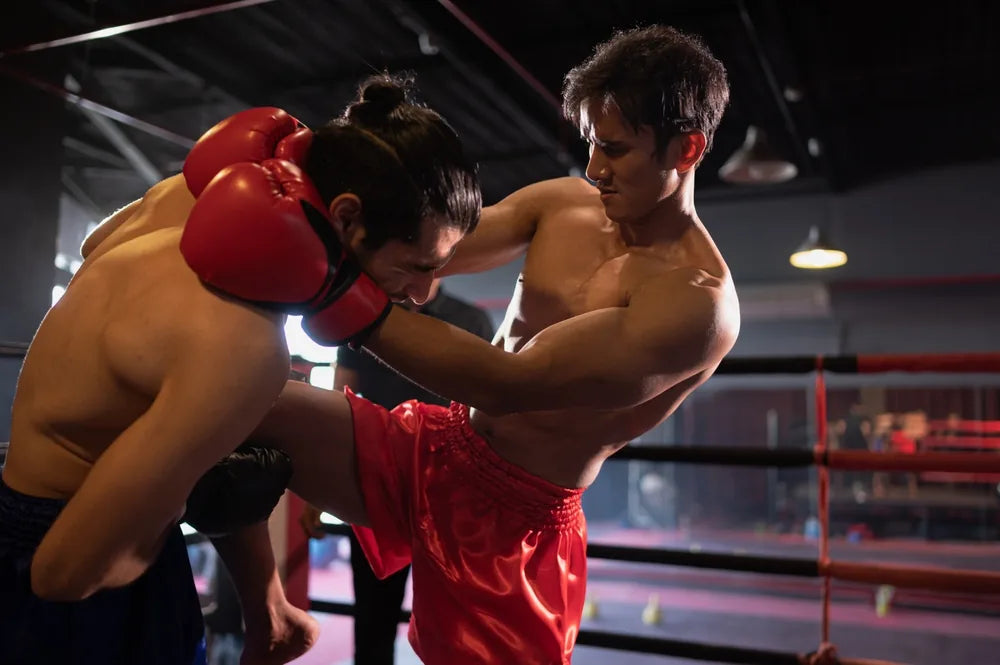
The elbow is bone against skin, with almost no soft tissue behind the point of impact. Its short travel makes it one of the sharpest tools in the clinch and at close range, exactly where punches start losing their leverage. Muay Thai's ruleset permits elbows in ways boxing and most kickboxing codes do not, which is a large part of why the elbow strikes Muay Thai fighters throw carry such a reputation.
Elbow Strike Fundamentals: Stance, Range, and Rotation
Here is how to elbow strike well: stance, range, and rotation, in that order. Stance stays squared, weight balanced, hands held high to hide the elbow's chamber before it moves. Range matters just as much as technique, elbows work at clinch range or half a step outside it, and anything thrown from outside jabbing range telegraphs long before it lands. Power runs from the ball of the rear foot, up through the hip, into the shoulder, and out through the point of the elbow, the same chain that drives a cross or a kick. The chamber and follow-through stay short and sharp, with no wind-up, and the elbow returns to guard on the same line it left on.
How to Throw an Elbow Strike: Step by Step
The horizontal elbow, Sok Tat, is the foundation to learn first.
Start in a balanced stance, hands high, elbows tucked.
Rotate the rear hip forward and pivot on the ball of the rear foot.
Drive the rear shoulder across, keeping the elbow tight to the body until the last instant.
Snap the forearm across the target on a horizontal line, striking with the bone just above the elbow point.
Return the arm to guard on the same path it travelled.
Lead-side elbows follow the same principles, just driven from the front leg and hip instead.
The Named Muay Thai Elbow Strikes
Muay Thai names each elbow strike by the line it travels.
-
Sok Tat, the horizontal or slashing elbow thrown across the body on a level plane, is the workhorse of the set.
-
Sok Ngad, the uppercut elbow, drives upward under the chin or into the jaw from close range.
-
Sok Ti, the downward or hammer elbow, drops vertically onto the crown or the bridge of the nose, often thrown by a taller fighter over the guard.
-
Sok Chieng, the diagonal elbow, cuts on a forty-five-degree line across the temple or brow, prized for opening cuts.
-
Sok Sap, the chopping elbow, angles downward with more shoulder drop than Sok Ti, useful over a low guard.
-
Sok Klap, the spinning back elbow, is a full pivot that brings the rear elbow around and through, used to catch a retreating opponent.
-
Sok Phung drives forward in a thrust rather than a slash. Launched off a forward jump, it becomes a jumping spear elbow.
-
Sok Ku lands both elbows at once, often jumping or stepping forward to split an opponent's guard.
Common Elbow Strike Mistakes
A handful of habits undo an otherwise sound elbow strike.
Winding up before the strike, which signals your intent too early.
Leading with the arm instead of the hip, which drains all the power out of the strike.
Throwing from too far out, since the elbow rewards close range, not long range.
Dropping the free hand while the elbow travels, which leaves your head open on the way back.
Rising up onto your toes on Sok Tat, which floats your weight off the striking side.

How Effective Is an Elbow Strike in a Real Fight?
Can an elbow strike kill you? In rare cases, yes, though the reasons why say more about anatomy than about the strike itself. The elbow lands on the olecranon process, the bony tip of the ulna, concentrating force onto a small, sharp point of bone rather than spreading it across a padded fist. That is why cuts open so readily, even at partial power, and why elbows account for the large majority of lacerations in Muay Thai competition. Full hip rotation landing on the jaw or temple can produce a concussive knockout, but effectiveness collapses outside clinch or close boxing range, where elbows miss or land soft. Force concentrated on the temple, the base of the skull, or the throat can, in rare cases, cause a fatal injury, a risk shared by any concentrated head strike and not unique to elbows. Muay Thai bouts run under rules, referees, ringside medical staff, and glove or elbow guard requirements in many jurisdictions, which is why fatalities from elbows inside a regulated ring remain extremely rare.
Training and Safety: Drilling Elbows Without Injury
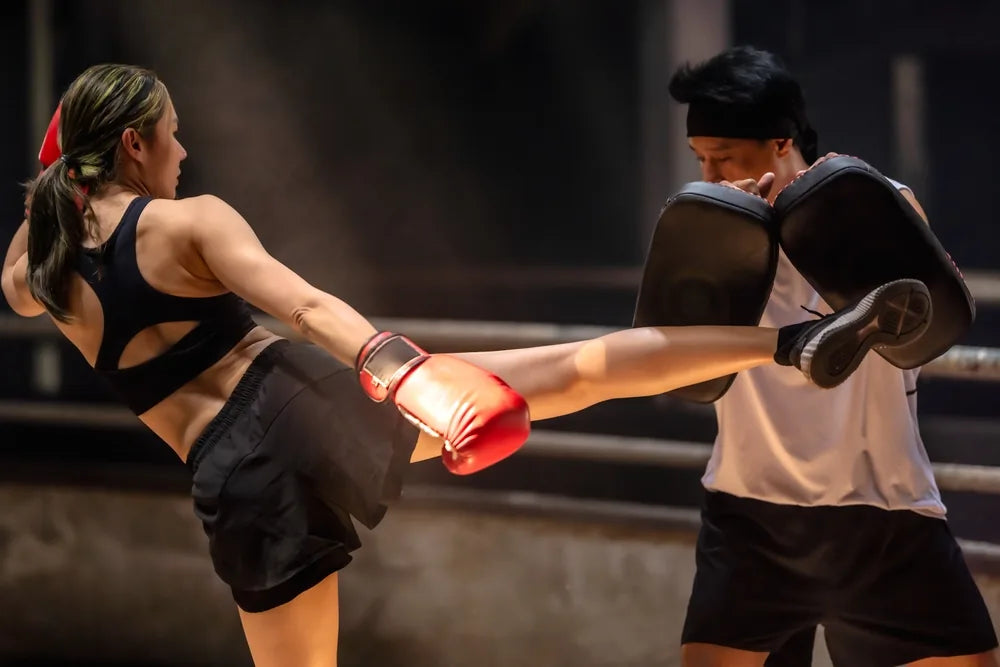
Build the mechanics before you build the speed. Start with air drills and shadow rounds until the movement is clean. Move to pad work with a holder wearing focus mitts or belly pads once the shape is solid. Any partner drilling calls for elbow pads or foam elbow guards, and technical sparring should control both speed and depth rather than full commitment. Keep a guard-up position when you are on the receiving end of elbow drills. Shin guards, elbow pads, and a proper mouthguard are standard kit before any full-contact round that includes elbows.
Gear Up With MAVINN Before Full Sparring
MAVINN builds combat gear for how Thai fighters actually train, from the clinch to the pad round. The shin guards for boxing and Muay Thai, along with the boxing gloves and Muay Thai shorts collections, cover the kit you need before your first full sparring session involving elbows.
The MAVINN Pattaya Stay and Train camp runs six days a week with experienced Thai coaches, giving you a supervised place to drill elbows properly rather than figuring it out on your own. Head coaches at the Pattaya camp include Namsaknoi Yudthagarngamtorn, The Emperor and a multi-division Lumpinee champion, and Kaolan Kaovichit, with the camp endorsed by Saenchai. First-time visitors get their first session free.
Train Your Elbows at the MAVINN Pattaya Camp
Good elbow technique only gets sharper under a coach who can see what yours actually looks like. Gear up with the MAVINN shin guards collection and book a session at the Pattaya camp to start drilling elbows the way Thai fighters do.
References
- IFMA Rules and Regulations. Retrieved September, 2026, from https://muaythai.sport/wp-content/uploads/2023/04/IFMA-Rules-and-Regulations-v2.04-1.pdf
- Epidemiology of Muay Thai Fight-Related Injuries. Retrieved September, 2026, from https://pmc.ncbi.nlm.nih.gov/articles/PMC5149460/
Frequently Asked Questions About Muay Thai Elbow Strikes
Can an elbow strike kill you?
In rare cases, yes, though this is true of any concentrated strike to the temple, the base of the skull, or the throat, not something unique to elbows. Muay Thai bouts run under rules, referees, and ringside medical staff specifically because head trauma of any kind carries that risk, and fatalities from elbows inside a regulated ring are extremely rare.
How do you elbow strike correctly?
Keep a squared stance with your weight balanced and hands high, then generate power from the ball of the rear foot, through the hip, into the shoulder, and out through the point of the elbow. The strike should be short and sharp with no wind-up, and the elbow should return to guard on the same line it left on.
How effective is an elbow strike in a real fight?
Very effective at close range, where the elbow's small point of bone concentrates force enough to open cuts and, with full hip rotation on the jaw or temple, produce a concussive knockout. That effectiveness drops sharply outside clinch or close boxing range, where elbows tend to miss or land without enough force behind them.
What is the correct way to throw an elbow strike?
Start with the horizontal elbow, Sok Tat, from a balanced stance with elbows tucked. Rotate the rear hip forward, pivot on the ball of the rear foot, drive the shoulder across while keeping the elbow tight to the body, then snap the forearm across the target on a horizontal line before returning to guard.