Muay Thai vs Kick Box in 5 Fundamental Differences
Key Takeaways
-
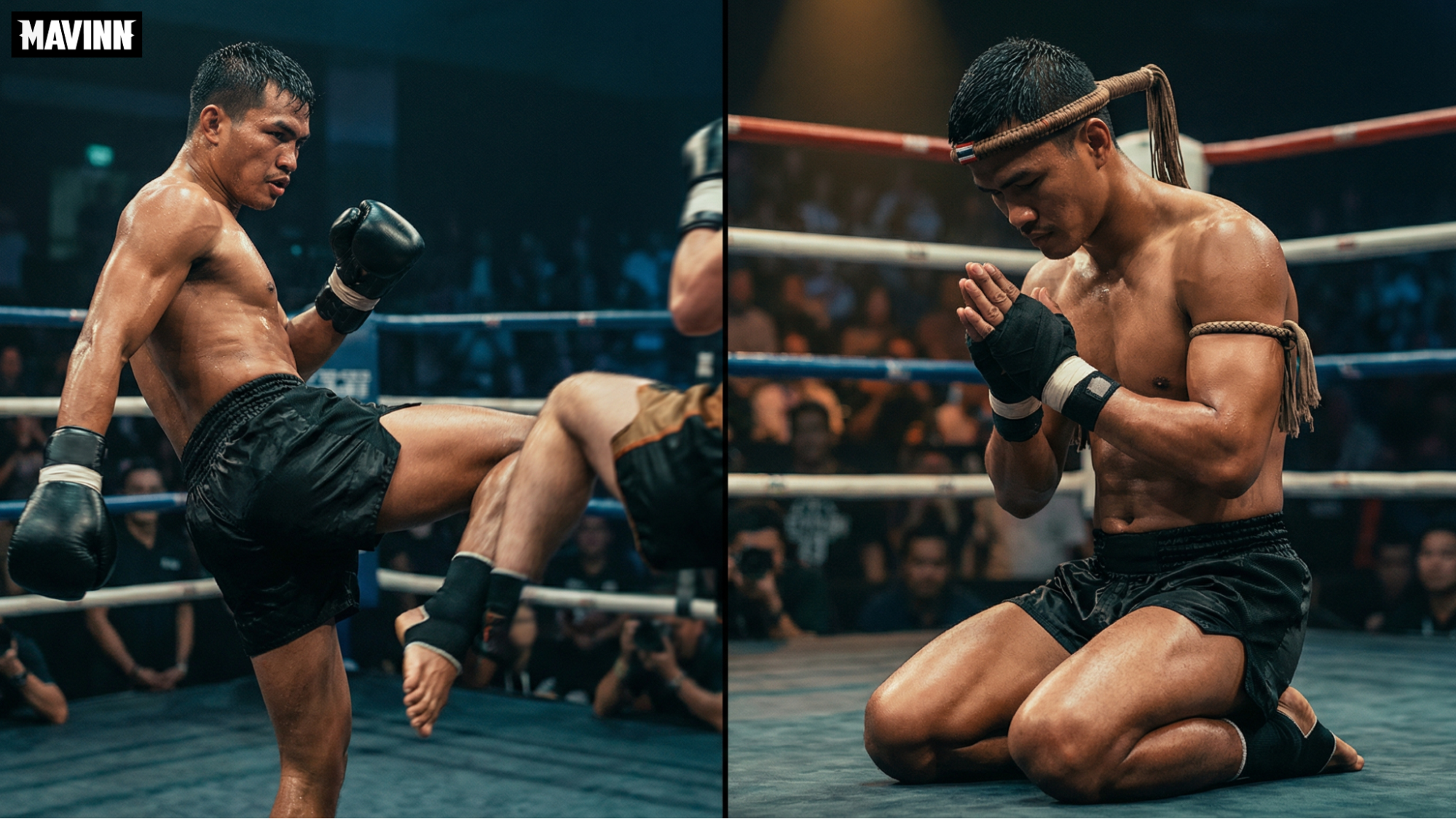
muay thai vs kick box - The primary distinction is the "Art of Eight Limbs," where Muay Thai includes elbows and knees while kickboxing restricts strikes to a four-point system of punches and kicks.
-
Muay Thai scoring favors effective power and damage from single strikes, whereas kickboxing judges reward high-volume combinations and constant pressure.
-
Clinching serves as a complex grappling tool in Muay Thai for landing knees and sweeps, while kickboxing rules usually limit or prohibit active clinching to keep the action at distance.
-
Defensive stances vary between the sports, with Muay Thai requiring an upright, square posture to block kicks and kickboxing favoring mobile, bladed footwork for rapid head movement.
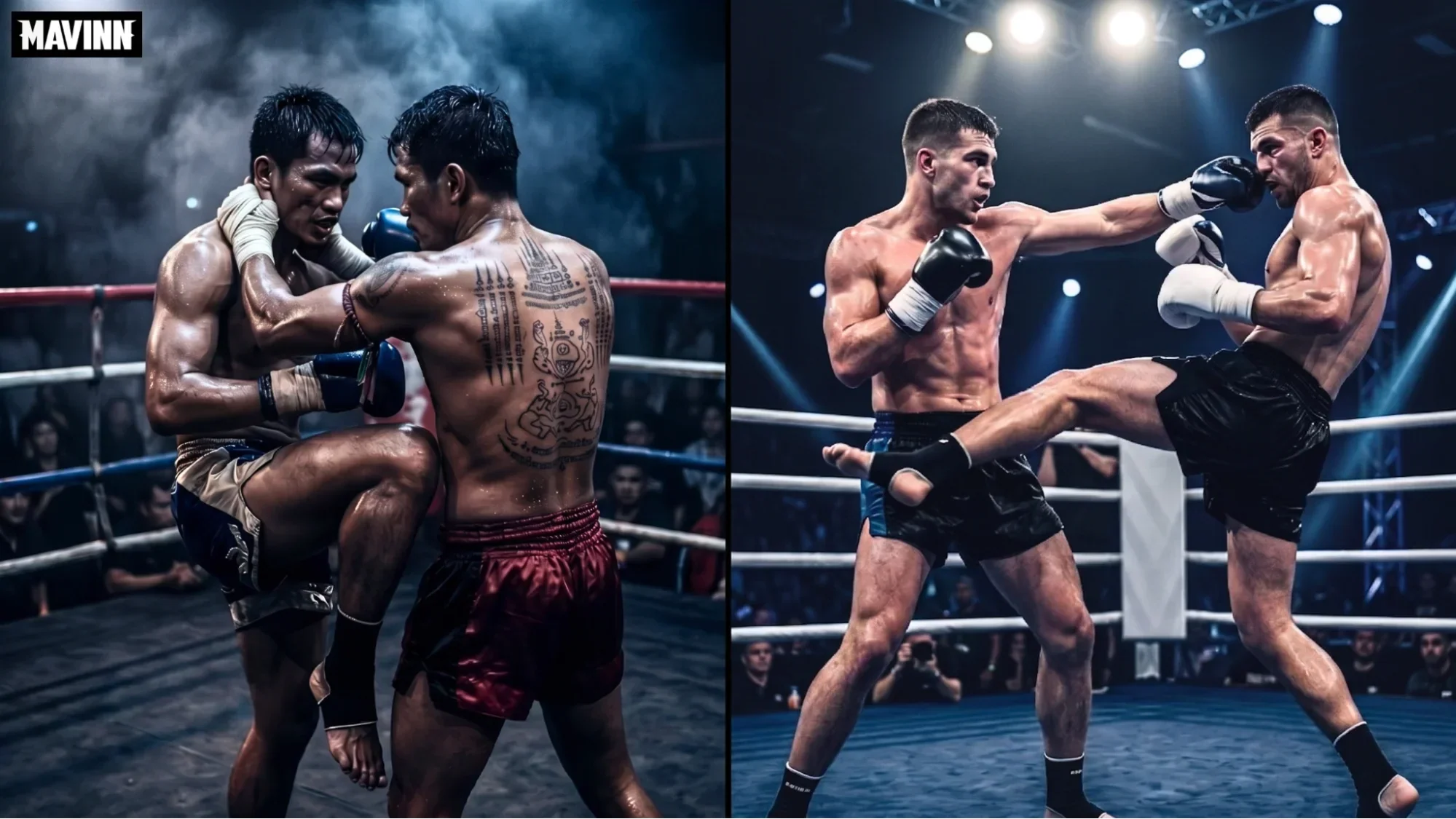
The primary distinction in muay thai vs kick box is the "Art of Eight Limbs," as Muay Thai utilizes elbows and knees while kickboxing restricts strikes to a four-point system of punches and kicks. Muay Thai favors devastating single strikes and intricate clinching to neutralize opponents at close range. Kickboxing instead prioritizes high-volume combinations and constant forward pressure to win on the judges' scorecards.
Stances also differ, with Muay Thai requiring a square, upright posture for blocking kicks compared to the mobile, bladed footwork used in kickboxing. This mobility allows kickboxers to move in and out quickly, whereas Nak Muays stand their ground to deliver maximum impact. Whether you are training for volume or power, MAVINN designs apparel that withstands the high-intensity friction of professional combat.
Table of Contents
- Key Takeaways
- Understanding Muay Thai vs kick box Are they the same ?
- Difference 1 Striking weapons in Muay Thai vs kickboxing
- Difference 2 The clinch rules in Muay Thai vs kick box
- Difference 3 Stance and footwork of Muay Thai vs kick box
- Difference 4 Punch mechanics Thai boxing vs boxing combinations
- Difference 5 Fight pacing and scoring in Muay Thai vs kick box
- Essential MAVINN gear for your Muay Thai vs kick box journey
- Conclusion
Understanding Muay Thai vs kick box Are they the same ?
The primary distinction in muay thai vs kick box is the "Art of Eight Limbs," as Muay Thai utilizes elbows and knees while kickboxing restricts strikes to a four-point system of punches and kicks. Kickboxing rules prioritize high-volume combinations and constant forward pressure to score points. Muay Thai instead favors devastating single strikes and intricate clinching to neutralize opponents at close range.
Stances also vary, with Muay Thai requiring a square, upright posture to block kicks compared to the mobile, bladed footwork used in kickboxing. This mobility allows kickboxers to move in and out quickly, whereas Nak Muays stand their ground to deliver maximum impact. MAVINN designs apparel that withstands the high-intensity friction of professional combat, regardless of your chosen discipline.
| Feature | Muay Thai | Kickboxing |
|---|---|---|
| Striking Points | 8 Limbs (Fists, Kicks, Knees, Elbows) | 4 Points (Fists, Kicks) |
| Clinching | Full grappling, knees, and sweeps | Restricted or prohibited |
| Stance | Square and upright for defense | Bladed and mobile for agility |
| Primary Goal | Power, damage, and control | Volume, speed, and pressure |
Difference 1 Striking weapons in Muay Thai vs kickboxing

The core distinction in muay thai vs kick box striking is the "Art of Eight Limbs" versus a traditional four-point system. Muay Thai uses fists, elbows, knees, and shins to provide a versatile arsenal for every range of combat. When comparing muay thai vs kickboxing, the latter restricts athletes to punches and kicks, forcing a heavier reliance on complex boxing combinations and rapid-fire low kicks.
Muay Thai allows elbows and knees to create lethal threats during close-range exchanges and inside the clinch. Kickboxing rulesets, like those in GLORY, typically ban elbows and limit knee strikes to maintain a high-paced flow. Professional apparel is built with reinforced stitching to survive the intense skin-to-fabric friction during these high-intensity 3-minute rounds.
| Feature | Muay Thai | Kickboxing |
|---|---|---|
| Striking Points | 8 Limbs (Fists, Elbows, Knees, Shins) | 4 Points (Fists, Feet) |
| Clinching | Full grappling, knees, and sweeps | Restricted or prohibited |
| Elbows | Permitted (often for cutting) | Strictly prohibited |
| Primary Weaponry | Power-heavy kicks and knees | High-volume punching combos |
Difference 2 The clinch rules in Muay Thai vs kick box
 The fundamental difference in muay thai vs kick box grappling is that Muay Thai treats the clinch as a primary scoring zone, while kickboxing views it as an interruption. You are permitted to engage in prolonged neck wrestling to land knees or execute unlimited sweeps and dumps in a Thai ring. Kickboxing rules typically force a referee break after one single strike or a few seconds of inactivity to keep the action at distance.
| Clinch Feature | Muay Thai | Kickboxing (K-1/Glory) |
|---|---|---|
| Duration | Unlimited if active | Immediate break or 1-3 seconds |
| Sweeps & Dumps | Legal and high-scoring | Strictly prohibited |
| Allowed Strikes | Knees and elbows | Knees only (often limited to one) |
| Neck Control | Two-handed "Plum" permitted | Restricted or forbidden |
Sweeping an opponent's support leg is a cornerstone of Muay Thai scoring that is completely illegal in professional kickboxing. While a Nak Muay will hunt for the "double plum" to control your head and posture, a kickboxer uses the clinch defensively to smother an attack. High-quality apparel with reinforced stitching and high-friction resistance ensures your gear survives the constant pulling and neck wrestling of a 5-round battle.
Difference 3 Stance and footwork of Muay Thai vs kick box

The primary difference in muay thai vs kick box positioning is the weight distribution and body orientation. Muay Thai practitioners utilize a square, tall stance with the chest facing the opponent to facilitate quick leg checks and teeps. This weight-back posture allows the lead foot to tap the canvas lightly, ready to block a low kick in a fraction of a second.
| Stance Feature | Muay Thai | Kickboxing (K-1/Glory) |
|---|---|---|
| Body Orientation | Square / Chest-on | Bladed / Diagonal |
| Weight Distribution | 70% on back leg | 50/50 or front-weighted |
| Footwork Style | Rhythmic marching | Lateral and bouncy |
| Head Movement | Minimal (stays upright) | High (bobbing and weaving) |
Kickboxing stances are typically more bladed, similar to traditional boxing, to allow for faster lateral movement and explosive punching combinations. This diagonal posture makes you a smaller target but leaves the lead leg more vulnerable to heavy inside kicks. While a Nak Muay marches forward with a rhythm, a kickboxer uses in-and-out movement to avoid pocket exchanges.
Premium training apparel features ultra-wide leg openings to accommodate the mobile footwork required for these high-volume "hit and move" tactics. Lightweight, 4-way stretch fabrics ensure your gear never catches on your knees during a pivot or switch-step. This freedom of movement is essential for maintaining a high pace through every 3-minute round.
Difference 4 Punch mechanics Thai boxing vs boxing combinations

When analyzing thai boxing vs boxing mechanics, kickboxers prioritize high-volume fluid combinations that blend punches into kicks, whereas Muay Thai fighters focus on single, heavy power shots. In muay thai vs kick box dynamics, the "long guard" in Thai boxing keeps distance to prevent clinching, while kickboxers use a tight guard for rapid-fire "hit and move" sequences.
Kickboxing mechanics allow for significant head movement and bobbing to slip punches, a tactic that is risky in Muay Thai due to the threat of knees. Specialized gear with lightweight, moisture-wicking fabrics ensures your range of motion remains unhindered during intense 4-punch combos. Reinforced stitching withstands the torque of a full-power cross, whether you are throwing a single shot or a 10-strike flurry.
| Punching Mechanic | Muay Thai | Kickboxing (K-1) |
|---|---|---|
| Volume | Low (Impact-focused) | High (Combination-focused) |
| Hand Speed | Moderate | Fast / Snapping |
| Head Movement | Minimal (Stay upright) | High (Slip and roll) |
| Power Source | Full hip commitment | Explosive weight shifts |
Difference 5 Fight pacing and scoring in Muay Thai vs kick box

Muay Thai is a slow-burn battle of attrition, while kickboxing is a high-octane sprint from the opening bell. In muay thai vs kick box dynamics, Thai scoring prioritizes damage, composure, and effective power over landing a high volume of light strikes. Judges often view the early rounds as a feeling-out process, placing the highest scoring value on the final three rounds.
Kickboxing operates on a "10-point must" system where constant volume and clean activity dictate the winner of every 3-minute round. This relentless pace requires high-performance 4-way stretch fabrics to prevent gear from binding during 100+ strike-per-round outputs. Because there is no "feeling out" period, fighters must maintain peak explosive capacity from the first 10 seconds.
| Scoring & Pacing | Muay Thai | Kickboxing |
|---|---|---|
| Fight Duration | Usually 5 Rounds (3 mins) | Usually 3 Rounds (3 mins) |
| Pacing | Slow start; peaks in R3-R4 | High intensity from R1 |
| Scoring Focus | Damage, dominance, & balance | Volume, accuracy, & activity |
| Key Scoring Strikes | Power kicks, knees, & clinch | Clean punches & kicks |
Essential MAVINN gear for your Muay Thai vs kick box journey
MAVINN gear bridges the gap between the heavy-impact requirements of Muay Thai and the high-speed mobility of kickboxing. For the muay thai vs kick box practitioner, your kit must allow for clinching flexibility while providing enough density to absorb repeated leg kicks. The MAVINN Boxing Gloves — IMPACT IN MOTION features multi-layered padding to protect the small bones of the hand during high-volume striking sessions.
| Gear Feature | Muay Thai Focus | Kickboxing Focus | MAVINN Solution |
|---|---|---|---|
| Gloves | Flexible palm for clinching | Stiff wrist for punch support | High-density foam + wrist stability |
| Shorts | High side-slits for knees | Lightweight, 4-way stretch | Rip-stop, moisture-wicking fabric |
| Shin Guards | Extra thick for bone-on-bone | Slimmer for fast footwork | Ergonomic contoured protection |
Durability is non-negotiable when transitioning between these two disciplines because the torque from a Thai roundhouse differs significantly from a snapping K-1 lead kick. The Short Training — Active From Street features reinforced stitching and breathable tech to prevent the fabric from soaking up sweat and weighing you down by the final round. This ensures you remain explosive whether you are practicing teeps or spinning backfists.
Conclusion
Choosing between muay thai vs kick box depends on whether you prefer the "Art of Eight Limbs" or high-volume combination striking. Muay Thai offers a versatile arsenal including elbows, knees, and complex clinching for close-quarters dominance. Kickboxing focuses on explosive speed and relentless punching flurries to overwhelm opponents under a high-pressure scoring system.
Your training style dictates your gear needs, as Muay Thai requires a stable, upright posture while kickboxers rely on lateral agility. Nak Muays prioritize devastating single strikes, whereas kickboxers maintain a high-octane pace through every three-minute round. MAVINN engineers apparel with reinforced stitching and 4-way stretch to handle the extreme friction of professional combat. Explore the full activewear collection to find gear built for both disciplines.
| Feature | Muay Thai | Kickboxing |
|---|---|---|
| Weaponry | 8 Limbs (Fists, Elbows, Knees, Shins) | 4 Points (Fists, Shins/Feet) |
| Clinch | Full grappling and sweeps | Restricted or prohibited |
| Pacing | Slow-burn; power-focused | High intensity; volume-focused |
| Stance | Square and upright | Bladed and mobile |